ALEXANDRIA, Va. — The joint committee studying changes to how Alexandria elects its School Board holds its first meeting Aug. 25, roughly a month later than the resolution creating it directed and one day after students return to class.
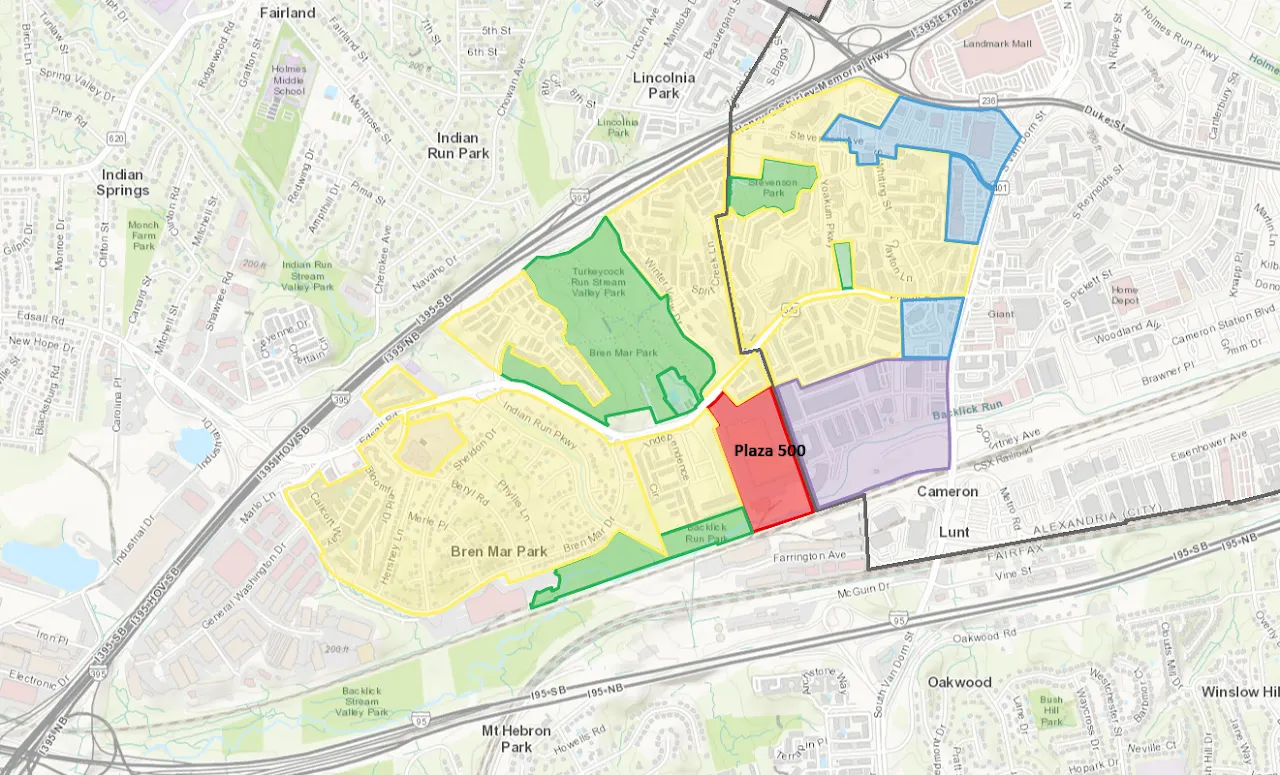
The meeting runs 6 to 8 p.m. at the Patrick Henry Recreation Center, 4653 Taney Ave. No agenda has been posted yet; materials will appear in BoardDocs.
City Council's June 23 resolution called for the City-ACPS Ad Hoc Committee on ACPS School Board Election Reform to begin meeting in July and deliver a report to both bodies by Nov. 10, when it dissolves. The August start leaves about 11 weeks. City Manager James Parajon's memo to council in June described work sessions running through Oct. 30.
Mayor Alyia Gaskins said in June that the committee's first meeting would be devoted to setting its own agenda — a step Councilwoman Sandy Marks had proposed in May, when she cautioned against "creating an ad hoc committee on creating an ad hoc committee."
The assignment
The committee is directed to evaluate staggered terms, term lengths, board composition and decreasing the size of the nine-member board, which serves roughly 16,000 students.
The first two reflect the School Board's November 2024 request for a charter amendment extending terms from three years to four and shifting from concurrent to staggered elections. The latter two reflect council's interest in going further.
Four voting members serve: Councilman Canek Aguirre and Councilwoman Marks, with Councilman Abdel-Rahman Elnoubi as alternate; and School Board members Abdulahi Abdalla and Kelly Carmichael Booz, with Ashley Simpson-Baird as alternate, appointed at the board's July 9 organizational meeting. A city staff team appointed by Parajon supports the work.
The board has new leadership since the committee was created. Christopher Harris was elected chair July 9, succeeding Michelle Rief, whose May memo prompted the resolution.
Why the deadline is contested
All nine board seats were last on the ballot in November 2024 under concurrent three-year terms. The next election is November 2027, with members seated in January 2028.
Even if the committee reports on time, council acts, and the General Assembly approves a charter amendment in its 2027 session, a new structure could not take effect until 2030. Elnoubi pressed the point during June's debate: "So why the rush?"
Council members said in June that the question of how quickly any change could take effect needs resolving as the work gets underway. Vice Mayor Sarah Bagley's motion separated the committee's recommendations from any obligation to pursue a charter amendment in 2027.
The disagreements
The 6-1 vote followed a nearly hour-long debate.
Elnoubi, a former board member, said he will not support any recommendation that omits reducing the board's size. He cited a parent petition with nearly 600 signatures seeking a smaller board — more than the roughly 450 responses the board collected surveying the community on staggered terms — and noted Arlington has five members for nearly 28,000 students while Fairfax has 12 for a division roughly 12 times Alexandria's size.
Marks favored keeping the work narrow, focused on the electoral questions the board raised. She had recommended striking the board-size language, then accepted it after Gaskins clarified that the "including but not limited to" framing keeps those topics on the table without foreclosing others.
City Attorney Cheran Ivery distinguished the resolution's terms: composition covers representation questions such as district versus at-large elections; size refers to the number of members.
Councilman John Chapman cast the lone no vote, objecting that he had seen little research tying staggered terms or a smaller board to student outcomes, and that the city has no legislative director to manage a charter amendment in Richmond. "Once that charter is opened up in Richmond, there are many things that can happen with it," he said.
Gaskins said she expects staff to prepare a parallel memo on other charter changes council might pursue. Parajon said in June it was 30 to 60 days out — a window now closed or closing.
Because Virginia is a Dillon Rule state, neither body can alter the election structure without General Assembly approval.