
Table of Contents
ALEXANDRIA, Va - Mayor Alyia Gaskins on Saturday rejected a Georgia congressman's bid to fold Alexandria and Arlington back into the District of Columbia, calling the proposal "absolutely ridiculous and a huge distraction" in her morning video update.
"We are proud Virginians. We chose to live in the Commonwealth of Virginia," Gaskins said in the video posted to her social media accounts. "Someone would feel that in a democracy where people are supposed to be able to voice their opinions, their perspectives by voting, that people would decide, well, if you disagree with me, I'm going to change the rules. ... That's not happening here in Alexandria. We're not going to let that happen."
The mayor first signaled her opposition Thursday night, sharing The Alexandria Brief's coverage of the bill on Instagram with the comment: "And this will not be happening."
Have you heard? A Republican Congressman from GA is wanting to reshape the District after Alexandria voters approved overwhelmingly a redistricting referendum.#alexandriava #mayorofalx #alyiaforalx pic.twitter.com/5herASZ0f8
— Alyia Gaskins (@Alyia4ALX) April 25, 2026
What McCormick is proposing
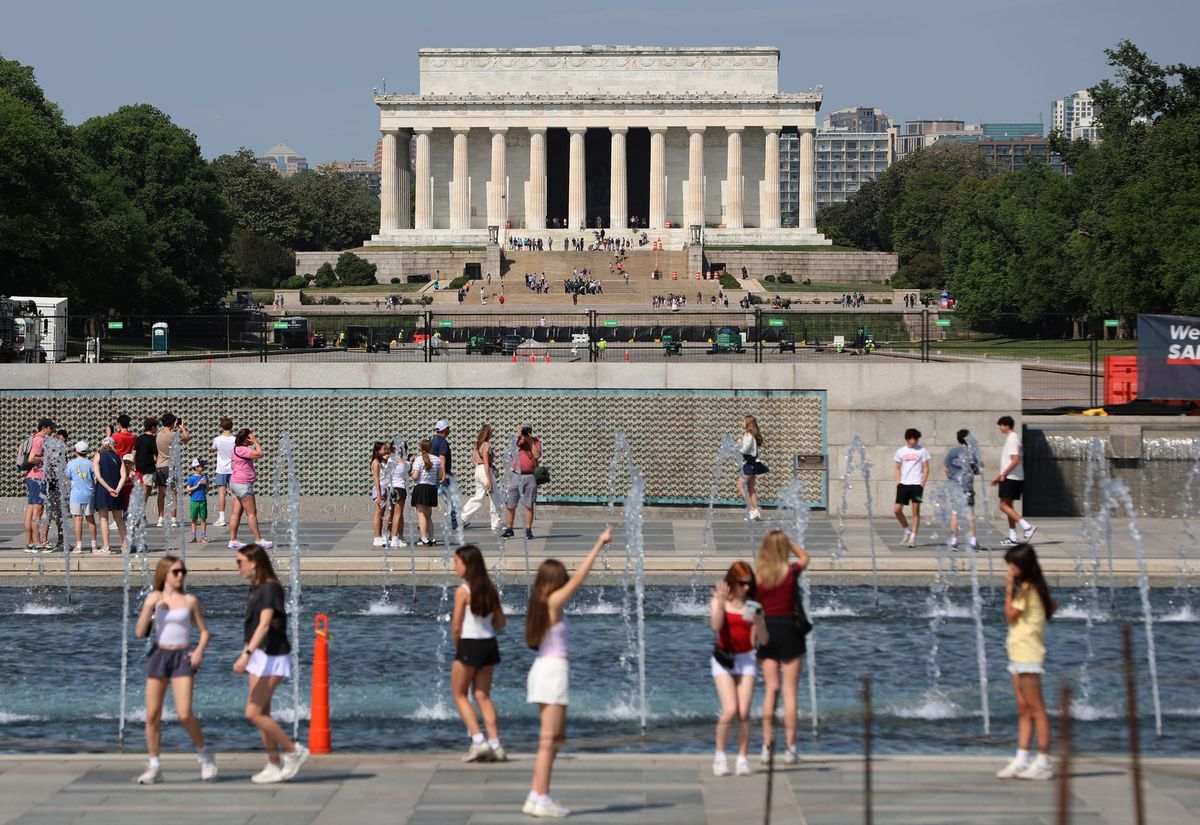
Rep. Rich McCormick (R-Ga.) introduced the "Make DC Square Again Act" on Wednesday, according to a press release from his office. The bill would undo the 1846 retrocession of 31 square miles from the federal district to Virginia — territory that today includes the City of Alexandria, Arlington County, the Pentagon, and Arlington National Cemetery.
McCormick has framed the bill as a constitutional correction, citing the Enclave Clause in Article I, Section 8 of the Constitution, which authorizes a federal district "not exceeding ten miles square" but does not address whether Congress can return any of it to the states.
"The Constitution never authorized Congress to carve pieces out of the federal District and hand them back to a state," McCormick said in his statement. "Democrats have spent years manipulating maps and boundaries to rig elections. The Make DC Square Again Act restores the original ten-mile-square District and ends the artificial advantage Virginia Democrats have recently gained from all the federal bureaucrats moving into Virginia."
The bill came three days after Virginia voters narrowly approved a Democratic-backed redistricting amendment that, if it survives a pending state Supreme Court challenge, could allow the General Assembly to redraw congressional maps to net Democrats up to four additional U.S. House seats. Critics of McCormick's bill, including University of Maryland Baltimore County history professor George Derek Musgrove, told the Associated Press the legislation is aimed at blunting that result. "It's not even a retrocession bill," Musgrove told the AP. "It's really a Virginia voter suppression bill."
McCormick's bill faces long odds in a closely divided Congress. Its full text was not immediately available.
How Alexandria voted
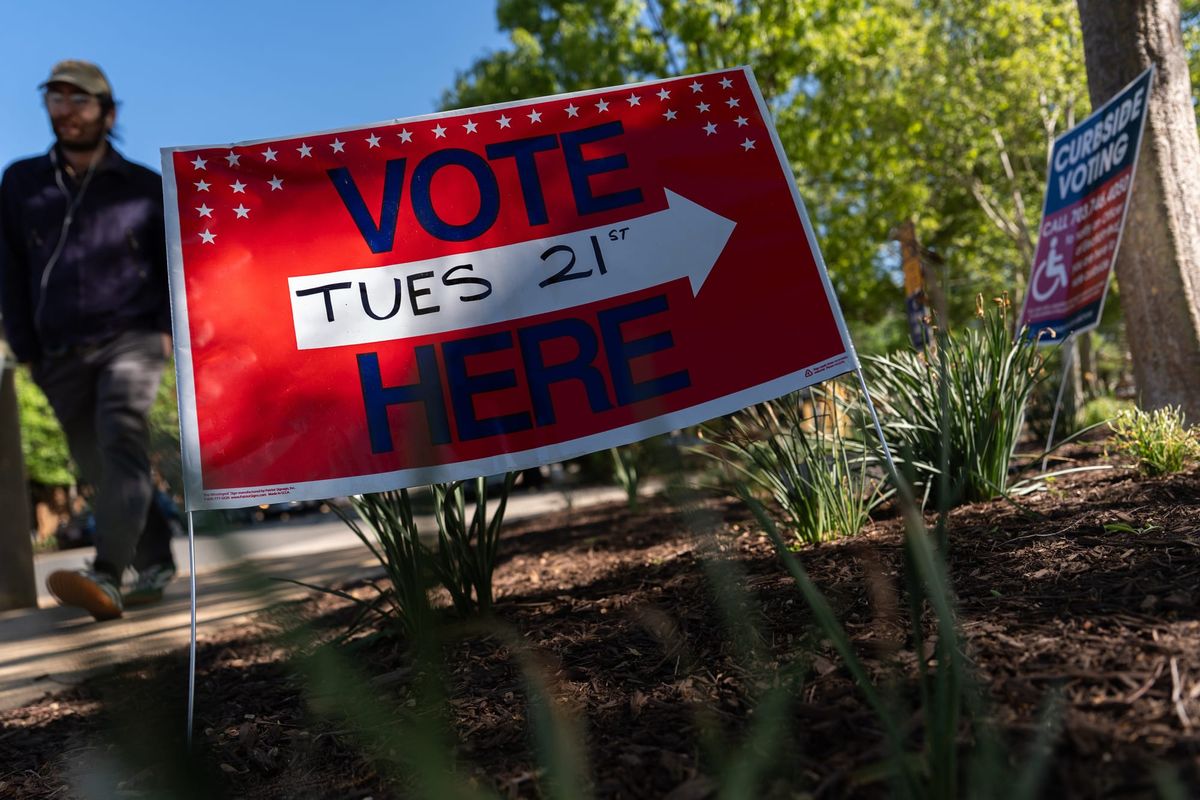
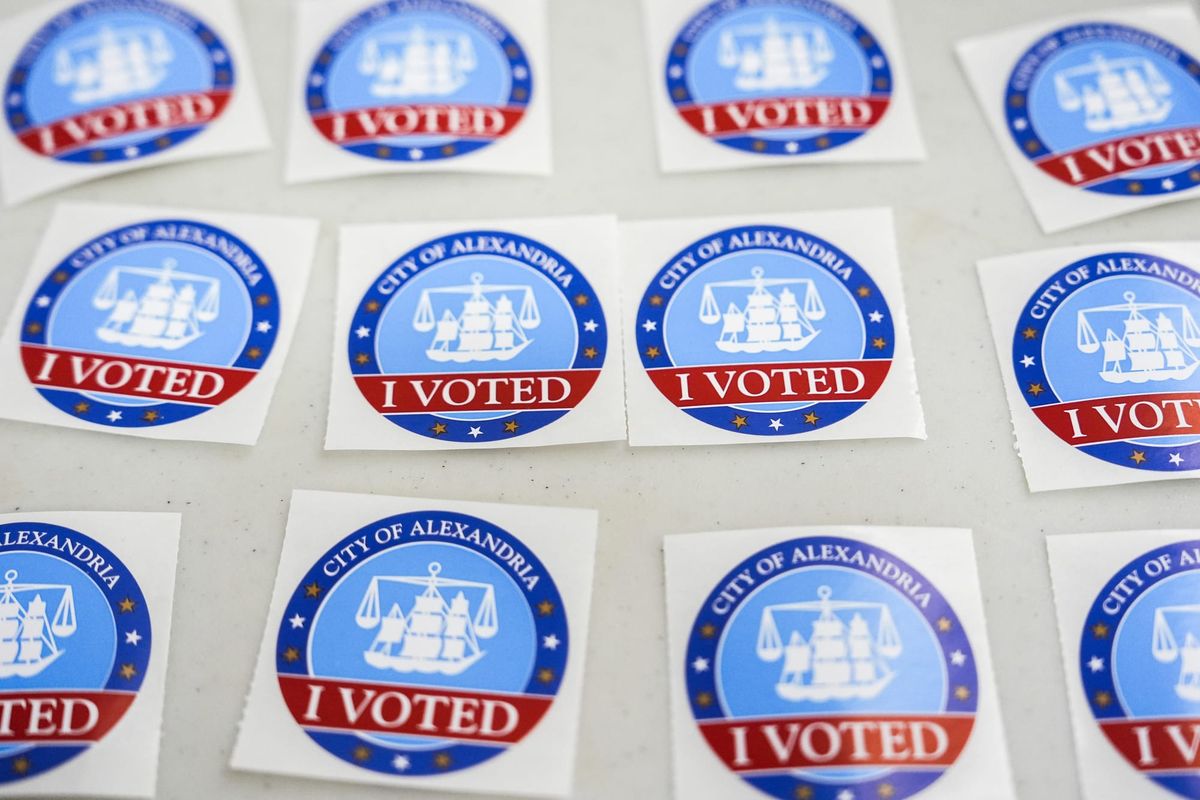
Alexandria approved the redistricting amendment 78.89% to 21.11% on Tuesday — 40,310 to 10,787, with all 32 precincts reporting, according to unofficial results from the Virginia Department of Elections. Statewide, the amendment passed 51.59% to 48.41% — 1,588,298 to 1,490,564, a margin of about 97,734 votes — with all 133 localities reporting. The Associated Press called the race for "Yes" on Tuesday night with 130 of 133 localities then reporting.
Alexandria and Arlington combined hold roughly 400,000 residents and broke for Kamala Harris over Donald Trump 77% to 20% in the 2024 presidential election, according to the AP. If the two jurisdictions were folded back into the District, Virginia's congressional map would have to be redrawn around a smaller state and the area's residents would likely lose full representation in Congress.
How retrocession happened in the first place
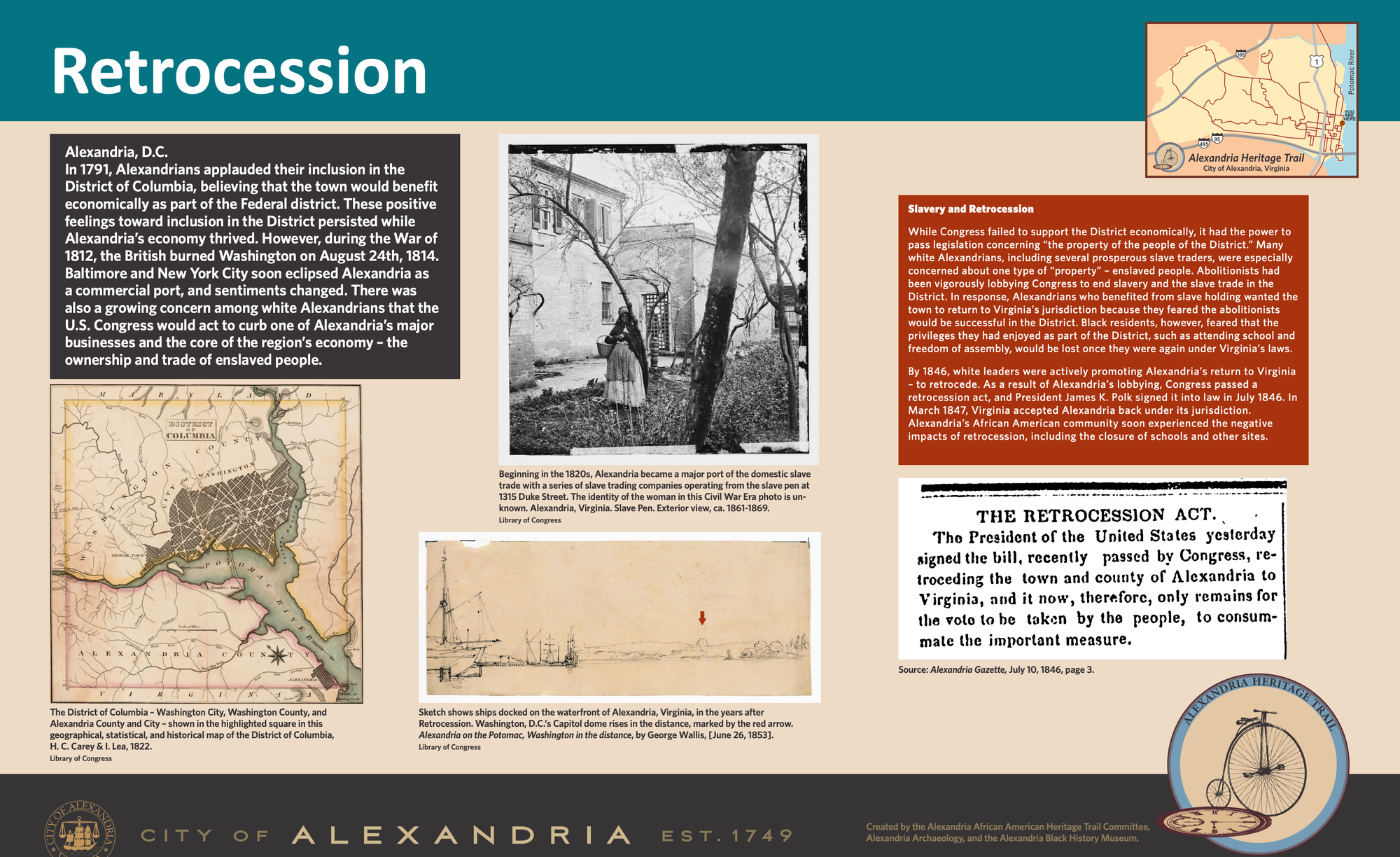
When Alexandria became part of the District of Columbia in 1791, residents welcomed the move, expecting economic benefits from being part of the new federal capital, according to the City of Alexandria. Sentiments shifted after the War of 1812, when British forces burned Washington in August 1814, and Baltimore and New York eclipsed Alexandria as a commercial port.
By the 1820s, Alexandria had become a major hub of the domestic slave trade, with slave-trading firms operating out of a pen at 1315 Duke Street, according to the city's African American Heritage Trail. As abolitionists lobbied Congress to end slavery and the slave trade in the District, white Alexandrians — including the city's prosperous slave traders — pushed for the town's return to Virginia, fearing the abolitionists would succeed. Black residents opposed the move, fearing they would lose protections they had under District law, including access to schools and freedom of assembly.
Congress passed a retrocession act, which President James K. Polk signed in July 1846. Virginia formally accepted Alexandria back under its jurisdiction in March 1847. Alexandria's Black community soon felt the consequences, including the closure of schools and other sites, according to the City of Alexandria.
The argument over reversing the move has surfaced periodically ever since. McCormick's office cites a similar bill introduced by Sen. Benjamin Wade in 1866, and proponents have long argued that Congress lacked the constitutional authority to cede the territory back in the first place.
Maryland is studying the opposite move
While McCormick's bill would expand the District by absorbing parts of Virginia, Maryland lawmakers are weighing whether the District should instead be folded into their state.
House Bill 1413, sponsored by Delegate Hornberger, would direct the Maryland Department of Planning to study the feasibility and economic impacts of D.C. retroceding to Maryland, excluding the federal enclave around the National Capital Service Area. The department would report to General Assembly committees by Dec. 1, 2026.
The bill received a hearing March 16 before the House Rules and Executive Nominations Committee. If enacted, it would take effect July 1.
Returning the District to Maryland has been floated by some Senate Republicans as an alternative to D.C. statehood, which the Democratic-led House passed in 2021 but did not advance in the Senate, according to the AP.
Read more on this topic
 The Associated Press
 The Associated Press
 The Associated Press
 The Associated Press
 The Associated Press
 Ryan Belmore