Updated 11:45 a.m. Wednesday, Sept. 23, with comment from Councilman Abdel-Rahman Elnoubi, who said he submitted the three unanswered questions about the program's effectiveness.
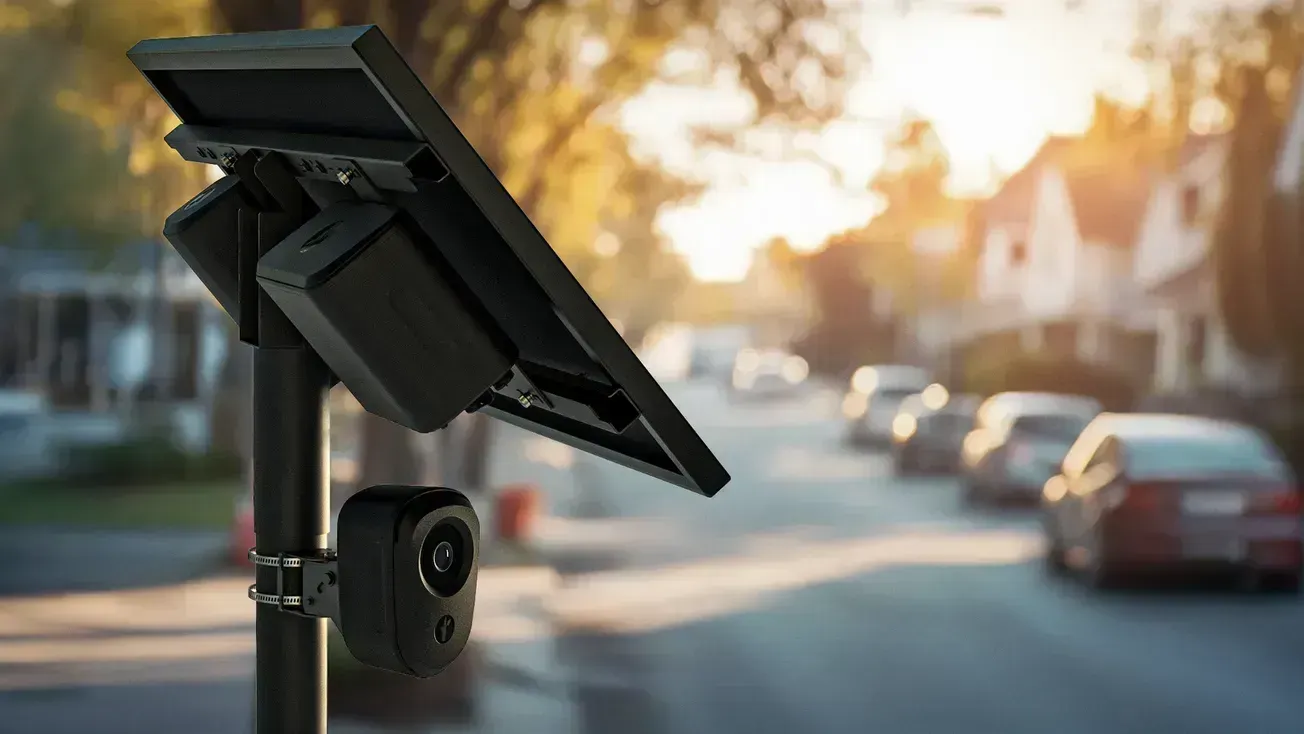
ALEXANDRIA, Va. — The Alexandria Police Department will publish a map showing where its 61 license plate reader cameras are located, according to an answer added to the city's website Tuesday.
"Council has provided direction to publish a map of the camera locations," the question reads. "When can a map be posted?"
The answer is one sentence: "By October 1, 2026, a map will be published."
The commitment reverses a position the department stated three weeks ago. Asked in August whether it would publish camera locations, APD told The Alexandria Brief on Sept. 6 that it would not, citing operational and investigative considerations.
"At this time, however, APD will not publish specific camera locations due to operational and investigative considerations," Strategic Communications Manager Tracy Walker wrote then.
The city attorney's office had also declined to release records containing camera locations to the Alexandria Times, citing a state exemption for investigative techniques.
Mayor Alyia Gaskins asked the department to publish the locations in August, along with its sharing partners and search activity. The other two appeared on the department's Flock transparency portal within days. Locations did not.
Vice Mayor Sarah Bagley pressed the question again at council's Sept. 8 meeting, saying she was leaving without full clarity on the number and location of cameras in the city. City Manager James Parajon said at the time that the city would want a follow-up conversation about locations.
What the map would settle
Camera locations have been the least settled part of the debate. The Alexandria Times reported this month that it had identified and verified 77 license plate readers in the city or on its borders — APD's 61, the Sheriff's Office's two, four at Northern Virginia Community College and about 10 that appear to be privately owned. A reporter catalogued listings on the crowd-sourced site DeFlock.org and visited each in person, finding eight cameras the site did not list and eight listings where no camera existed.
The Times also reported that cameras were more concentrated in census tracts with lower median family incomes, a pattern a Christopher Newport University researcher has documented in Norfolk.
APD has said its placement was based on crime patterns, transportation networks and connections to surrounding jurisdictions, and that it consulted the city's Office of Race and Social Equity and the Independent Policing Auditor.
Two more answers, three still pending
The city also answered two of the five questions it posted Monday with no responses attached.
Both concerned red-light cameras, and the answers draw a sharp line between the two systems. Flock cameras are investigative tools governed by § 2.2-5517, the state's license plate reader law. Red-light and school-zone speed cameras are civil traffic enforcement tools governed by separate statutes, with faster purge requirements: red-light data must be destroyed within two business days if no summons is issued within 10 business days, and speed camera data within 60 days if no summons is issued within 30.
Verra Mobility, the city's vendor, performs the speed camera purging.
"Information collected through automated Red-Light and Speed Cameras shall be limited to that necessary for the authorized civil traffic-enforcement purpose," the answer says, "and shall not be used as a substitute for, or treated as equivalent to, investigative ALPR data."
Three questions remain unanswered, all of them about the statistics the department has used in defending the program.
One asks about the 266 arrests APD has attributed to license plate reader support — over what period, out of how many searches, and what "directly attributed" means. A second asks how many of the 134 stolen vehicle recoveries since March 2023 began with a reader hit rather than an owner's telematics alert or a citizen report. The third asks how camera placement relates to auto theft patterns.
The department's separate offense-type dashboard still reports 1,348 searches and has not been updated since Sept. 8.
Councilman Abdel-Rahman Elnoubi told The Brief on Wednesday that he submitted the three questions still listed as unanswered, saying he believes in evidence- and data-driven decision-making. He sent them to McGuire on Sept. 16, noting that one predated the Sept. 8 council meeting and two followed it.
What else is coming
APD said a third-party audit by Ohio State University criminologist Robin Engel is expected to begin by Oct. 1, and that two community listening sessions are scheduled for Thursday and Oct. 7.
Its sharing list stood at 138 agencies Tuesday, unchanged since Sept. 17 and down from 161 on Aug. 18.
This is part of The Alexandria Brief's ongoing coverage of Alexandria's license plate reader program. Read every story here. Have something we should know? ryan@alexandriabrief.com