ALEXANDRIA, Va. — The Alexandria Police Department published written answers Thursday to the questions City Council raised about its license plate reader program, disclosing a contract end date, a start date for an outside audit, a full inventory of city cameras and confirmation that it has cut off every Virginia agency holding an immigration enforcement agreement.
The responses, posted to the department's public safety dashboard, address questions from council's Sept. 8 meeting. They went up the same evening Police Chief Tarrick McGuire told a city commission he had decided himself, after consulting City Manager James Parajon, to stop sharing data with agencies that have 287(g) agreements with U.S. Immigration and Customs Enforcement.
"Of the 24 Virginia law enforcement agencies reported by DHS as having some form of 287(g) agreement, 12 are Flock Safety customers," the department wrote. "APD has proactively restricted access for those 12 agencies with 287(g) agreements."
The agencies cut off
The count matches what has happened on the department's Flock transparency portal. Eleven agencies came off the sharing list between Sept. 11 and Sept. 15, all holding ICE task force agreements, as The Alexandria Brief reported Tuesday. The Loudoun County Sheriff's Office, the last 287(g) participant on the list, came off between Monday and Thursday.
Loudoun's removal extends the decision beyond what the earlier pattern suggested. ICE runs three versions of the program, and the 11 agencies removed last weekend all held task force agreements, which deputize officers to enforce immigration law during routine patrol. Loudoun holds a warrant service officer agreement, the narrower version limited to serving immigration warrants on people already in custody. Loudoun Sheriff Mike Chapman said in a letter to his county board Tuesday that his office does not conduct field enforcement with or for ICE.
One figure does not match. APD attributes to the Department of Homeland Security a count of 24 Virginia agencies with 287(g) agreements. ICE's own participating-agency roster, dated Sept. 15, lists 22.
Two other agencies have also left the list since Monday, neither of which holds a 287(g) agreement: Arlington County Police and the Floyd County Sheriff's Office. The list stood at 138 agencies Thursday, down from 161 on Aug. 18.
The contract
The department disclosed contract details it had not previously provided. The city first contracted for Flock cameras in 2023 through Insight Public Sector, a reseller, and the current term expires in April 2027.
APD said the city may stop service at any time, and that switching providers would require coordination with fiscal, legal and procurement staff.
The third-party arrangement was the subject of criticism at Thursday's Commission on Information Technology meeting, where a member said the contract incorporates Flock's terms of service by reference and that the company has changed those terms several times in recent months without the city's consent.
Audits
APD gave its fullest description yet of how it reviews searches. A policing unit within the Technology Services Division audits all employee activity in the system every 30 days, checking that each search carries an offense type, a case or incident number and an approved reason.
The department said the review also looks for repeated queries of the same vehicle by the same user, searches unrelated to an employee's duties, unusually high query volume and inconsistencies between case information and the stated purpose of a search. Results are logged, forwarded to the division commander and reported monthly to the chief's office. Serious misuse would be elevated to the Office of Professional Responsibility.
The answers do not say what share of searches the audit examines. The Brief has asked that question three times since Aug. 14.
On the 56 instances flagged over three years and first reported by the Alexandria Times, the department said it found no case in which the system was misused for an improper or unauthorized purpose, and that the most common problems were missing or mistyped case numbers.
The third-party audit is expected to begin by Oct. 1. Robin Engel, an Ohio State University criminologist already reviewing APD's traffic stops and use-of-force data, is finalizing an agreement to add the license plate reader program as a third area of review.
APD also said the city's Independent Police Auditor could potentially review its audit reports, subject to legal review and council direction.
The camera inventory
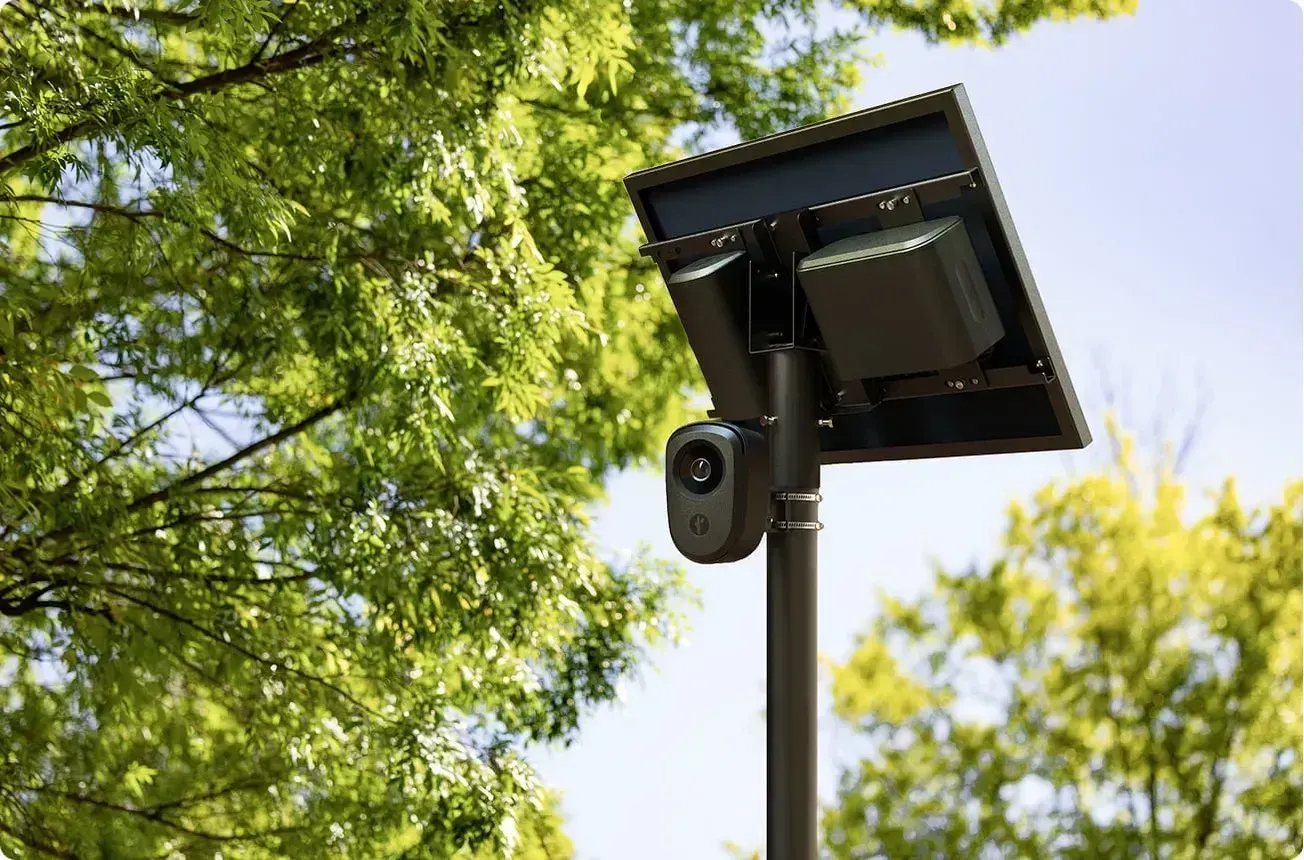
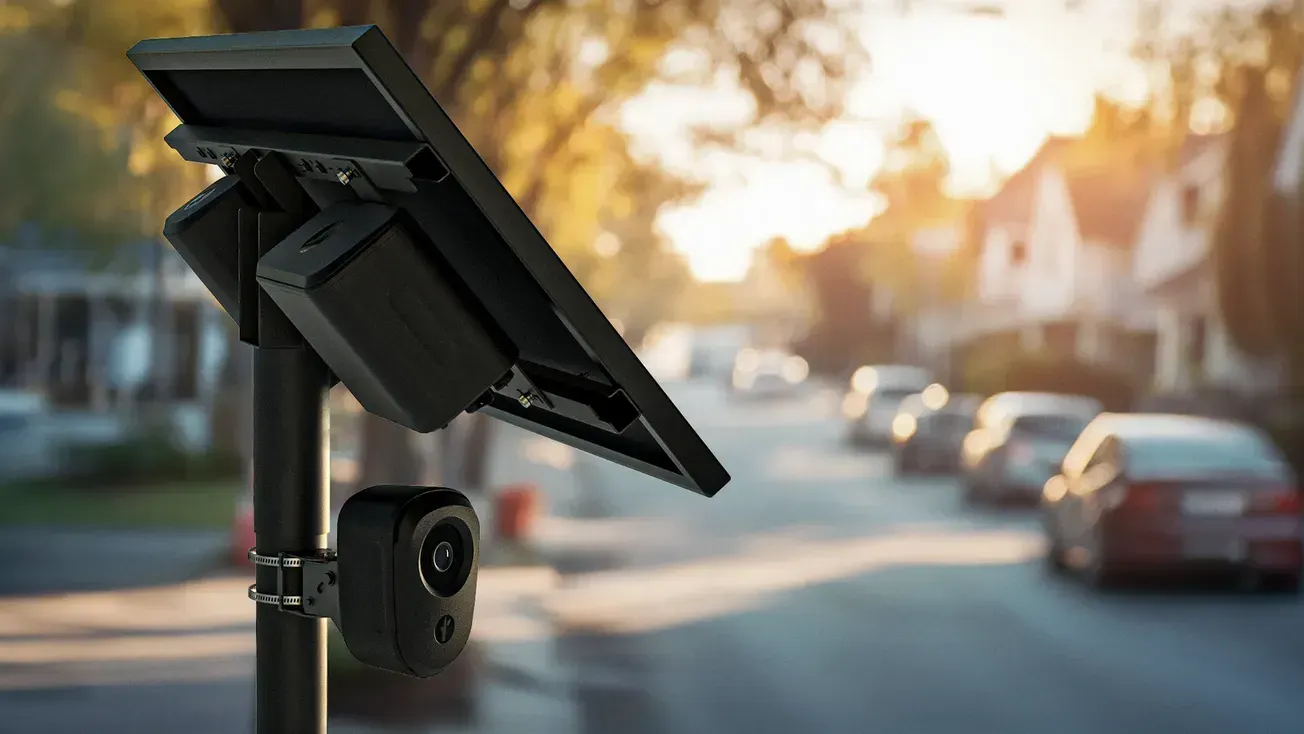
Answering a question from Councilman Canek Aguirre, the department published a full accounting of its camera systems: 61 fixed license plate readers, 10 vehicle-mounted parking enforcement readers, 628 body-worn cameras, 70 in-car cameras, six red-light cameras at four intersections, seven school-zone speed cameras, and 43 public safety camera systems including 27 pole-mounted units and five mobile trailers. Eleven of the public safety cameras are inoperable.
On private cameras, also raised by Aguirre, APD said sharing is one-way: private owners may choose to share data with the department, but APD does not share its data with private entities, and privately sourced data is not retained unless tied to a criminal investigation. Northern Virginia Community College does not share its data with APD.
Retention and access
APD said data held beyond 21 days is limited to material tied to a criminal investigation, and that such data is removed from the Flock system and transferred to the department's digital evidence system, where it is no longer accessible through the Flock network.
Asked whether the 21-day period risks destroying evidence in sexual and domestic violence cases, where reporting is often delayed, the department cited its investigation of a series of indecent sexual acts across Del Ray, Rosemont, North Ridge and Old Town in mid-2025, which it said extended beyond 60 days.
The department said it is evaluating whether to require outside agencies to contact APD directly before running certain searches — the control Councilwoman Sandy Marks asked about — but noted it would require additional staffing across all shifts. It also said restricting sharing could affect APD's own reciprocal access to partner agencies' cameras.
On abortion-related tracking, APD said such use would be unlawful, that the case prompting the question arose outside Virginia, and that its network is limited to Virginia agencies bound by state law.
Camera placement
APD said the 2023 deployment responded to rising vehicle thefts and that placement was based on crime patterns, transportation networks and connections to surrounding jurisdictions. It said it consulted the Office of Race and Social Equity and the Independent Policing Auditor and reviewed the city's race and social equity mapping.
The Alexandria Times reported this month that cameras were more concentrated in census tracts with lower median family incomes.
What comes next
The department said it has identified two tentative dates for community listening sessions, Sept. 24 and Oct. 7, at locations on the east and west sides of the city.
It has not set a timeline for evaluating alternative vendors, saying only that it is meeting with vendors in the coming weeks.
Asked whether any technology exists that captures images only when a violation occurs, the way a speed camera does, APD said current research has not identified one.
The Alexandria Brief runs solely on reader support — no ads, no corporate owner. If this story was worth reading, consider becoming a monthly or annual supporter.
Become a supporter · One-time contribution · Gift a membership
Ryan Belmore is an Alexandria journalist, neighbor, and the founder and publisher of The Alexandria Brief. Send tips and feedback to ryan@alexandriabrief.com.
© 2026 Alexandria News, LLC. All rights reserved. This material may not be published, broadcast, rewritten, or redistributed without permission.