Table of Contents
ALEXANDRIA, Va. — Lost Boy Cider's new cider maker walked outside during a delivery pickup Wednesday and bit into an apple off one of the trees in front of the building.
It was about 11:30 a.m. Jay Coulter turned to a co-worker and said that as soon as the truck was loaded, they were harvesting. He left at 9:45 p.m.
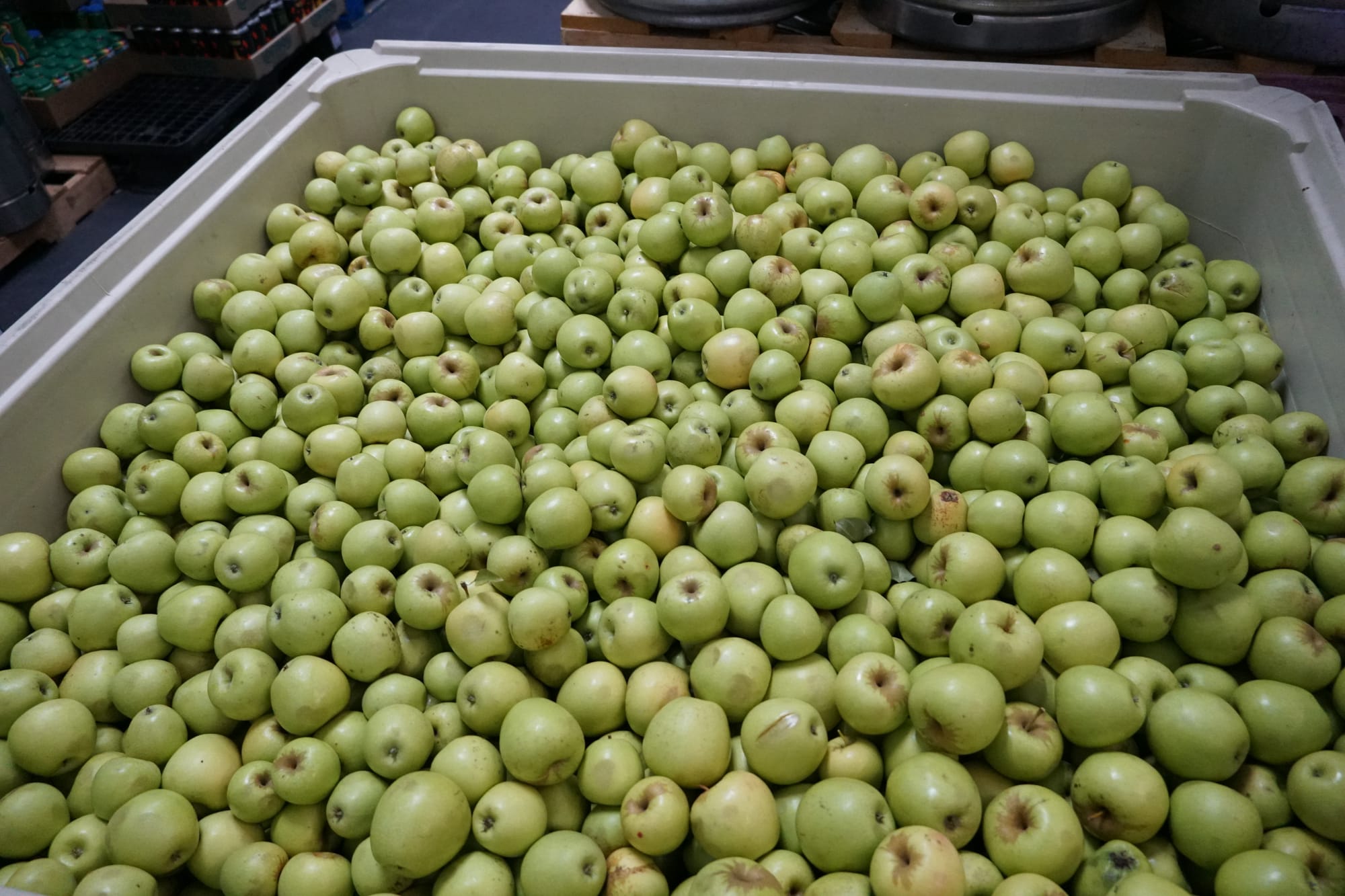
The pick brought in about 100 gallons from eight trees planted in December 2018, before the cidery opened. Founder Tristan Wright said he had picked from them here and there over the years and used the fruit at home, but that the trees had not been harvested at any scale and had never gone into a commercial batch. "Nobody has done that yet here," Coulter said.
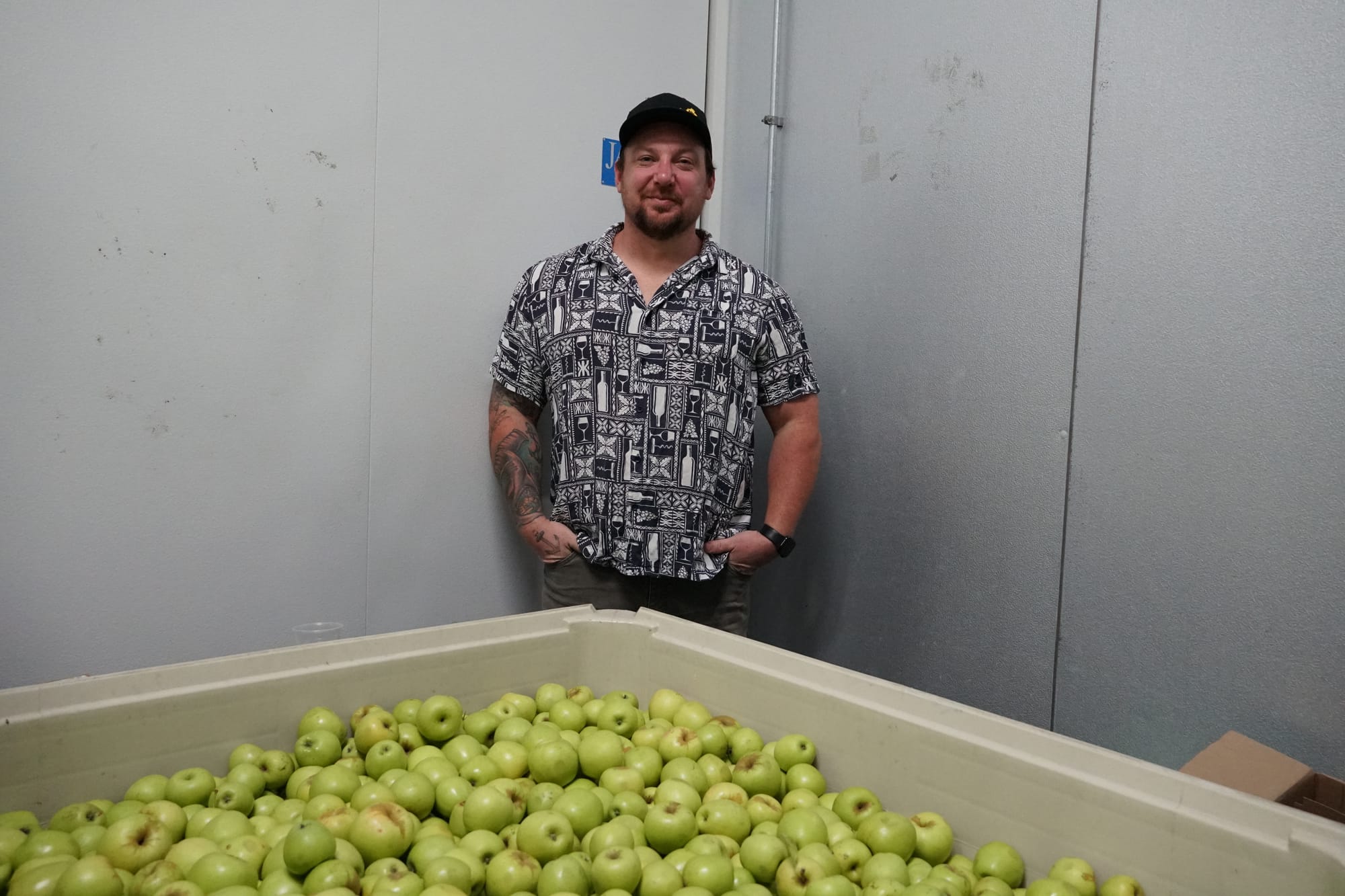
Coulter started June 24 and was introduced to the taproom's regulars Thursday during trivia night, working the bar alongside Wright. He succeeded Morgan Kowalczyk, who joined the cellar team in 2023 and had been Lost Boy's head cidermaker since 2024. She left in late June.
Coulter grew up on a farm in East Tennessee and moved to Virginia in 2021 to become a winemaker, studying through the University of California, Davis. He apprenticed for about two years at Son of a Bear Ciders at Taylor Vineyard in Orange, under Brenden McMahon, a former Horton winemaker. A consulting job followed at a new East Texas winery that had lost its vineyard and about 600 cases of white wine. He replanted the vineyard, turned down a full-time offer and returned to Virginia.
He spent roughly a year and a half as production manager at Coyote Hole in Lake Anna, running cider and brewing operations. When the company moved away from cider, he left, then spent about nine months out of the industry clearing his own orchard and vineyard in Stafford by hand.
He had applied to Lost Boy twice before and been passed over both times. He got it on the third try, after seeing Wright's posting on a trade website about 20 minutes after it went up.
"Third time's the charm," he said.
Coulter said he treats cider the way he was trained to treat wine. "We approach cider as wine," he said. "It's white wine," unless the apples have red flesh. Asked what he wished people understood about cider, he said, "It's not beer."
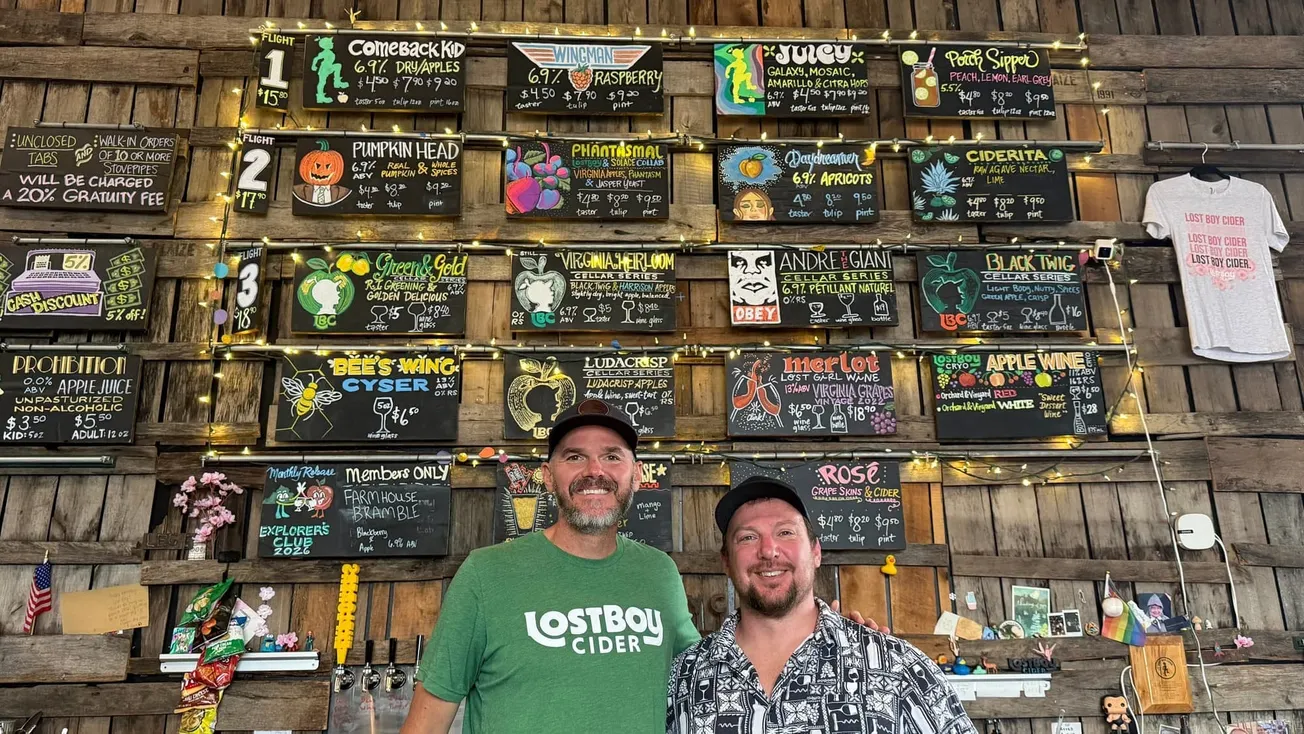
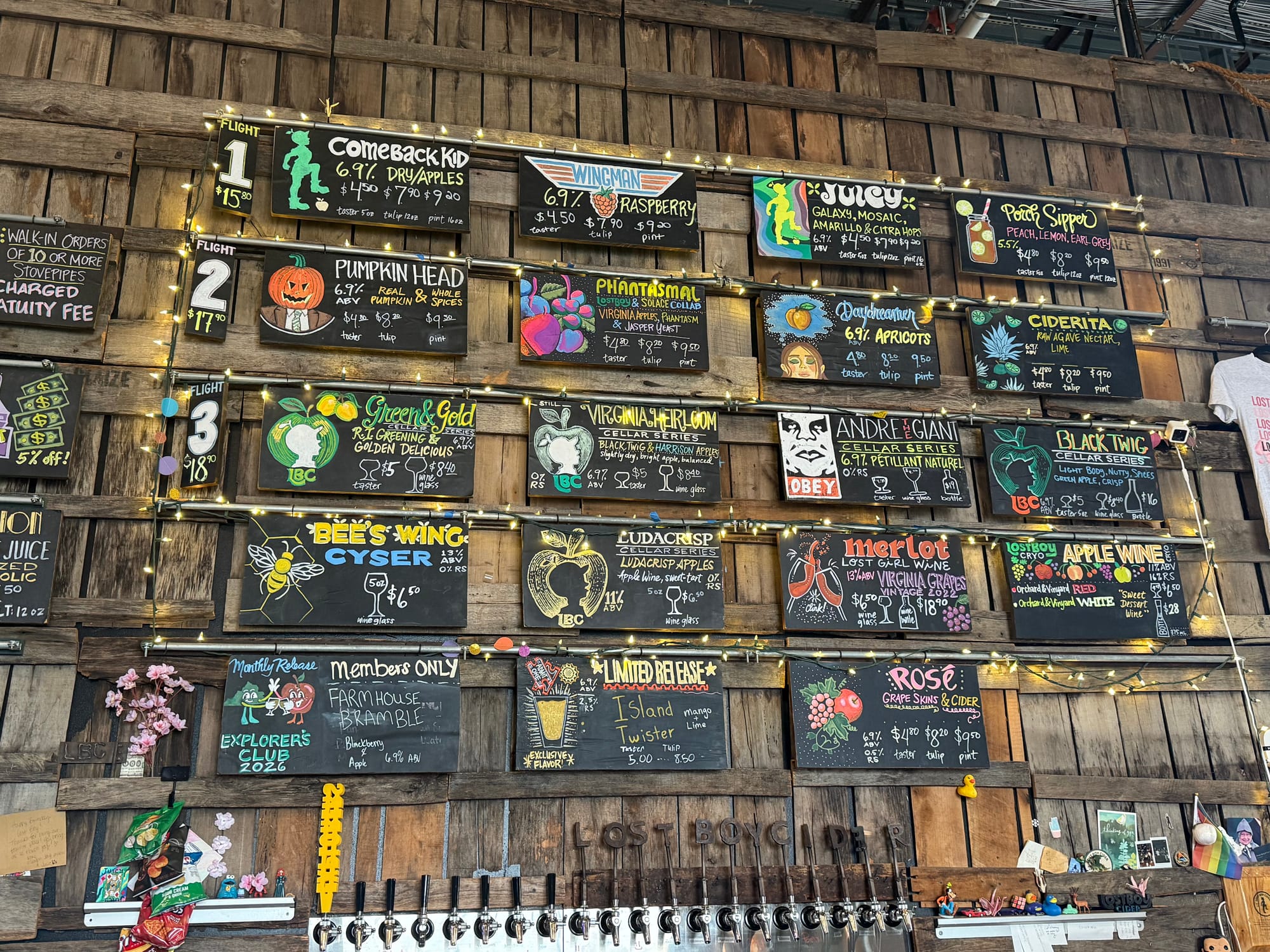
One cider on the wall is already different. Bramble, a returning blackberry cider, was made in earlier batches with agave as a sweetener. Coulter said that detail was not in the recipe notes he inherited, which he called the cidery's cookbook, so he made it with blackberries and apples only, then chilled it after malolactic fermentation, a secondary fermentation that softens acidity. He kept the result, renamed it Farmhouse Bramble and had the sign redone.
"When it comes to what Bramble traditionally has been, this is completely different," he said. One of the trivia teams that plays Thursdays calls itself Bring Back Bramble.
He also wants to revive barrel aging, using barrels he has sourced before from KO Distilling in Manassas and Ragged Branch near Charlottesville, with rum barrels harder to come by. He wants to return the cidery's Black Twig to bottle fermentation, as earlier makers did, and to bring in more whole fruit rather than buying juice.
"You can do a lot with the juice when you ferment it," he said. "But if you get the fruit, you can do a lot more."
His Stafford orchard, which carries 38 varieties and could approach 60 after next year's plantings, will supply some of it. Wright has agreed to let him keep the orchard and truck the fruit north. Many of the trees are varieties too small or too irregular for commercial growers, including a Turkish apple, Kandil Sinap, he wants to try on its own.
The cidery's juice partnership with Winchester grower Glaize Apples continues, both men said.
Wright said the apples picked Wednesday will be aged in a white-wine style and are unlikely to be ready before late spring. They will stay in the taproom and at farmers markets rather than go to distribution. "We're holding on to that," he said.
Wright, who founded Lost Boy after gluten and soy allergies ended his interest in beer and whiskey, said the cidery makes gluten-free, sugar-free, unfiltered and unpasteurized cider with what he called a low-to-no-intervention approach. He said cider is among the healthier options in alcohol, adding that he could not call it healthy because it is alcohol.
The cidery opened about seven months before the COVID-19 pandemic. Wright said events now sustain it. "This place is surviving because of our events," he said. Fall Fest is set for Oct. 24.
Coulter said he intends to spend as much time in the taproom as in the cellar. He first met Wright three years ago as a customer, over an hourlong conversation at the bar.
"If the owner's behind the bar and having those conversations," he said, "why shouldn't the cider maker be doing the same thing?"
The trees are mostly Golden Delicious, with French and English varieties grafted on. Wright said an apple tree lives about a century, and that grafting carries the older wood forward onto younger trunks. He traced the cidery's Black Twig back through Glaize's family, five generations of growers, to trees Glaize's ancestor sold to Jefferson's orchard manager at Monticello.
Black Twig is Coulter's favorite apple. He grew up with it in Tennessee.
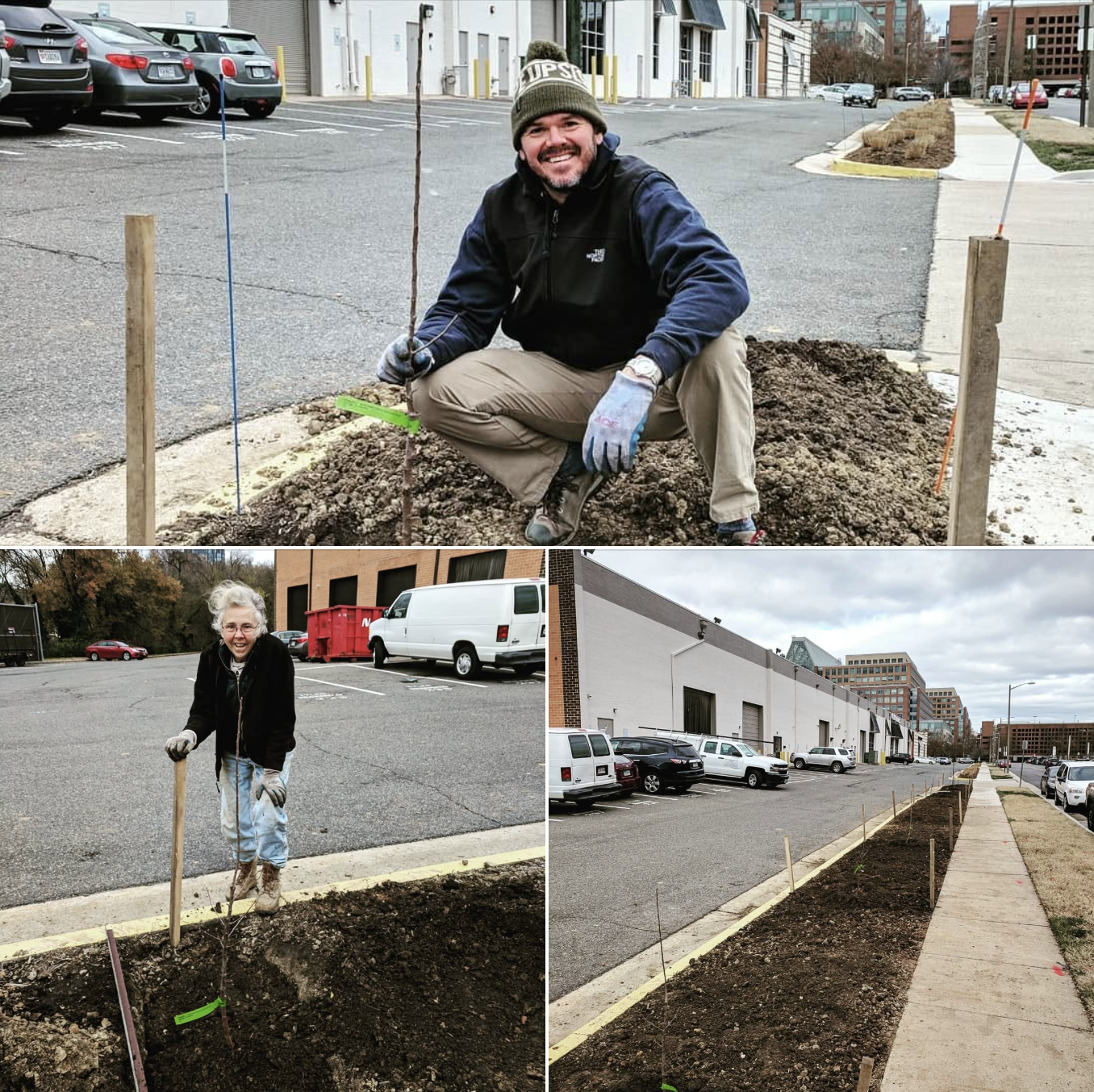
Wright planted the eight trees with his mother on Dec. 4, 2018, in soil they amended by hand, and posted that day that he hoped the little guys would survive. He credited his mother with an amazing amount of the work. The two of them kept the deer off. For most of eight years the fruit went unpicked or came home in a bag.
Wednesday it came in by the bin. He said he needed to send her a photo.
Ryan Belmore is an Alexandria resident and the founder and publisher of The Alexandria Brief. Send tips, feedback, and story ideas to ryan@alexandriabrief.com.