Updated June 10, 2026, 9:25 a.m.: An earlier version of this story misspelled the last name of Julian Gonsalves, the city's director of P3 partnerships. This version also clarifies that the Community Development Authority would be created in a separate step in the fall of 2026, after Saturday's vote on the term sheet.
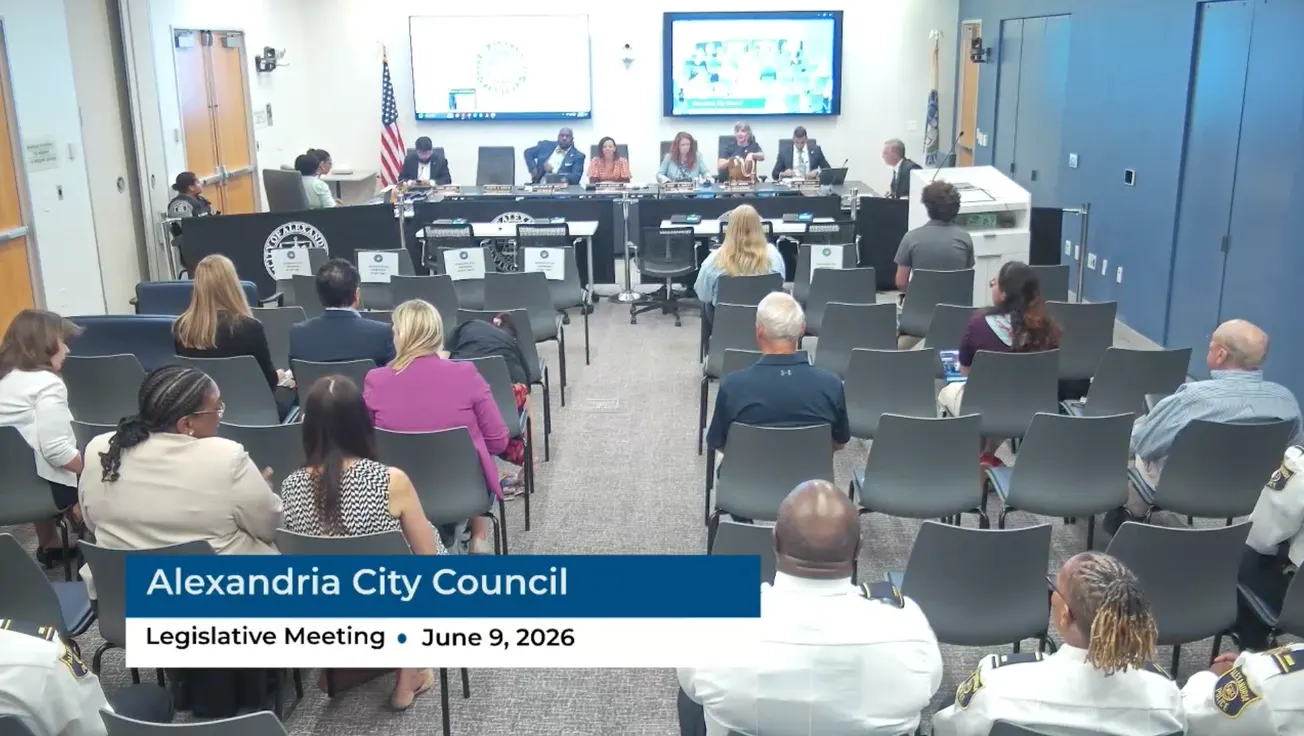
ALEXANDRIA, Va. — Alexandria City Council spent the better part of Tuesday night working through the financing proposal at the center of the former Potomac River Generating Station redevelopment, but the night's most consequential business is still to come: the binding votes land Saturday, June 13.
City Manager James Parajon and his staff presented the term sheet for a proposed $135 million tax increment financing package as an oral report — an informational briefing with no vote attached. "This is what's going to be in front of you on Saturday at public hearing," Parajon told the council, framing the evening as the last walk-through before the council weighs in for real.
 Ryan Belmore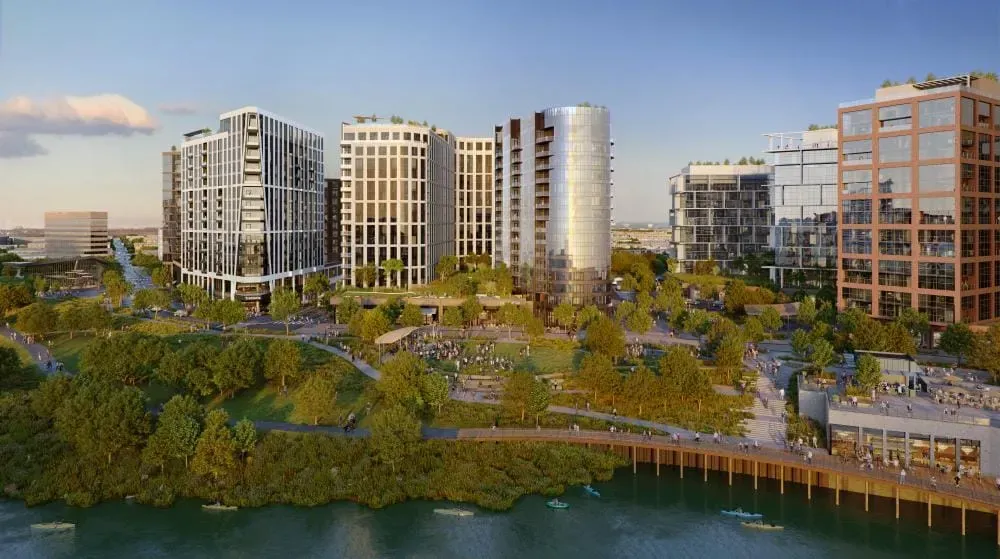
 Ryan Belmore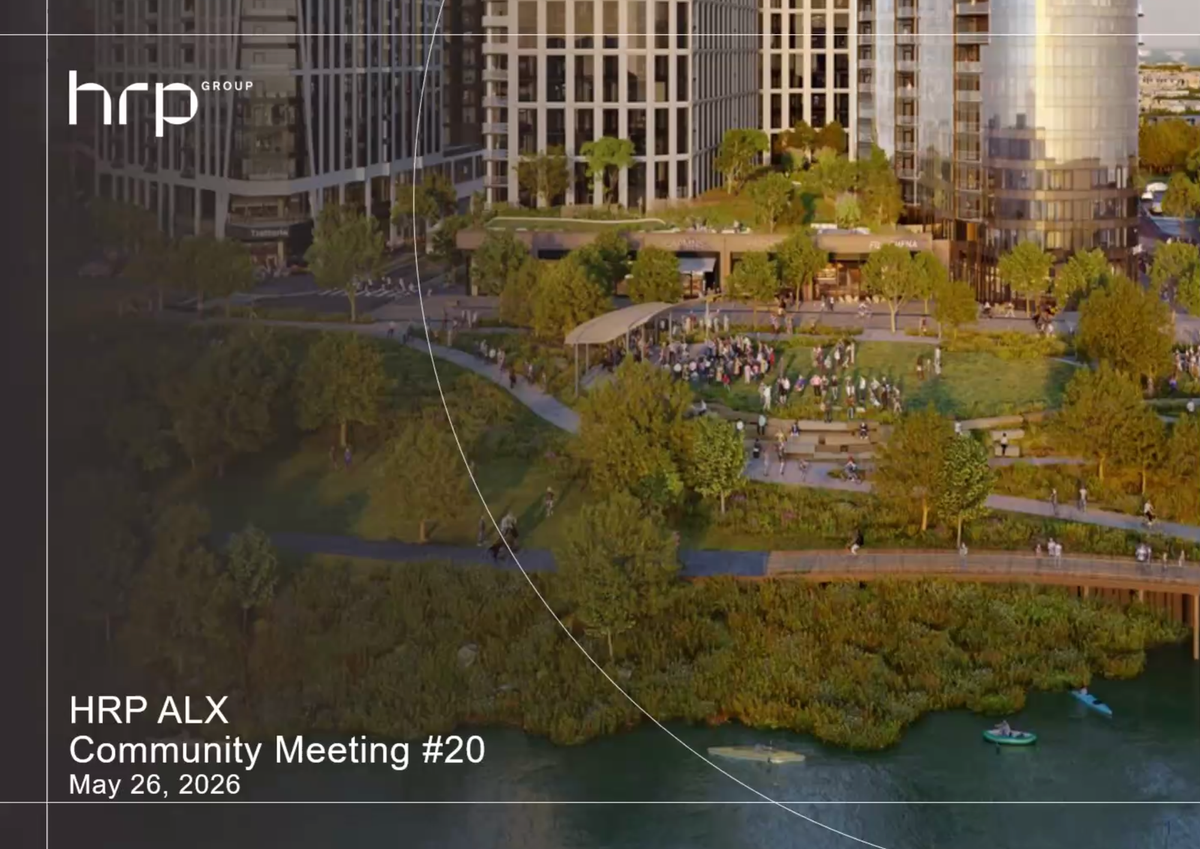
 Ryan Belmore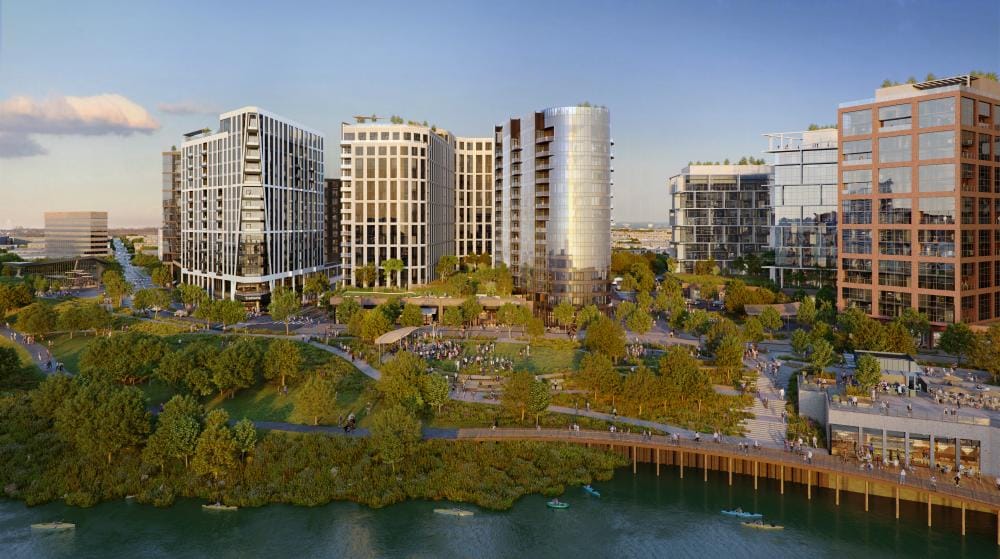
What the term sheet would do
Staff laid out the structure largely as City Manager Parajon's team first described it in April. To make the site ready for vertical construction, the coal-fired plant must be abated and deconstructed, the ground remediated, and infrastructure built. The city's participation would cover a portion of those site-readiness costs through tax increment financing, split across two phases, with a new Community Development Authority created to issue the bonds and backstop the financing. Saturday's vote covers the term sheet itself; Parajon told the council the CDA would be created in a separate step in the fall of 2026, with the council serving as its board.
Julian Gonsalves, the city's director of P3 partnerships, drew the distinction that staff has emphasized throughout: unlike the city's general obligation bonds, which are secured by general fund revenues, the proposed CDA bonds would be secured by a portion of the new tax revenue the project itself generates, with a special assessment levied only against project property owners as a backstop. The same tool, he noted, has been used by Fairfax County, Arlington County, and the city itself at Landmark.
The numbers staff presented: roughly $290 million in total public infrastructure improvements; up to $135 million in net infrastructure proceeds from revenue bonds, of which no more than $70 million would be issued for Phase I; and a requirement that the developer invest at least $110 million in public infrastructure in Phase I before receiving any Phase I financing proceeds. Once the roughly $320 million in debt service tied to the bonds is accounted for, the city estimates it would still net more than $770 million in on-site incremental tax revenue for city services over the life of the deal — revenue that staff stressed would not exist at all absent the redevelopment. The full build-out envisions up to 2.5 million square feet of commercial and residential development, a private capitalization north of $2 billion, more than five acres of publicly accessible open space, and roughly 160 affordable housing units delivered through a separate affordable-housing partnership.
Stephanie Landrum, CEO of the Alexandria Economic Development Partnership, made the case for why the site warrants public participation at all. The plant, she said, represents one of the largest redevelopment opportunities in the region, identified in the 2017 Old Town North Small Area Plan as a "catalyst" site whose redevelopment would set the tone for the surrounding neighborhood. Because deconstructing and remediating a coal plant sits on top of the ordinary cost of development, she said, the total cost of bringing the site into use is "extremely expensive," and the city has not found state grants, federal dollars, or commercial anchors willing to close the gap in a weak market.
The questions council asked
The most pointed exchanges came from Vice Mayor Sarah Bagley, who pressed staff on timing. "Why now?" she asked — the city entitled the coordinated development district in 2022 and approved infrastructure plans since. Landrum's answer: the ownership came to the city and said it had taken the project as far as it could on entitlements alone and now faced a financing gap, a situation she said is "unfortunately not unique" given unstable construction and labor costs that have stalled fully entitled projects across the city.
Before the substantive discussion began, Bagley made a conflict-of-interest disclosure: because she owns a condominium directly adjacent to 1300 North Royal Street, she has a personal interest in the term sheet. After consulting the city attorney, she said, she determined she may participate and vote under a legal exception that applies when a member belongs to a business, profession, or group of three or more people affected by a transaction. The disclosure means Bagley is positioned to vote Saturday despite her proximity to the site.
Councilwoman Sandy Marks, the council's newest member, used her time to invite staff to address publicly a question she said she had been getting from residents: what the selection of HRP means for the remediation itself. Gonsalves pointed to the developer's experience on coal-plant and industrial sites — citing its work at 776 Summer Street in Boston, its dust-monitoring dashboards, and its voluntary enrollment in the state's remediation program — and confirmed that residents can expect a similar public dust-monitoring dashboard during construction here.
Bagley, for her part, signaled she is not yet committed. "I'm not there," she said, citing the volume of questions from the community and her neighbors on remediation and process, and noting the late hour. She said she expected a deeper breakdown of the remediation and deconstruction process at Saturday's hearing — a point Mayor Alyia Gaskins reinforced, noting staff has prepared a slide walking through the partners involved in environmental oversight.
Parajon, asked what becomes of the site without the deal, offered the starkest framing of the night: the property was owned by a company that operated a coal plant and was "never going to remediate it," and absent this partnership he expects the site would sit as-is — generating no revenue and, he argued, hindering the city's ability to attract the commercial uses the neighborhood plan envisions.
Also Tuesday: the police plan and a clean consent vote
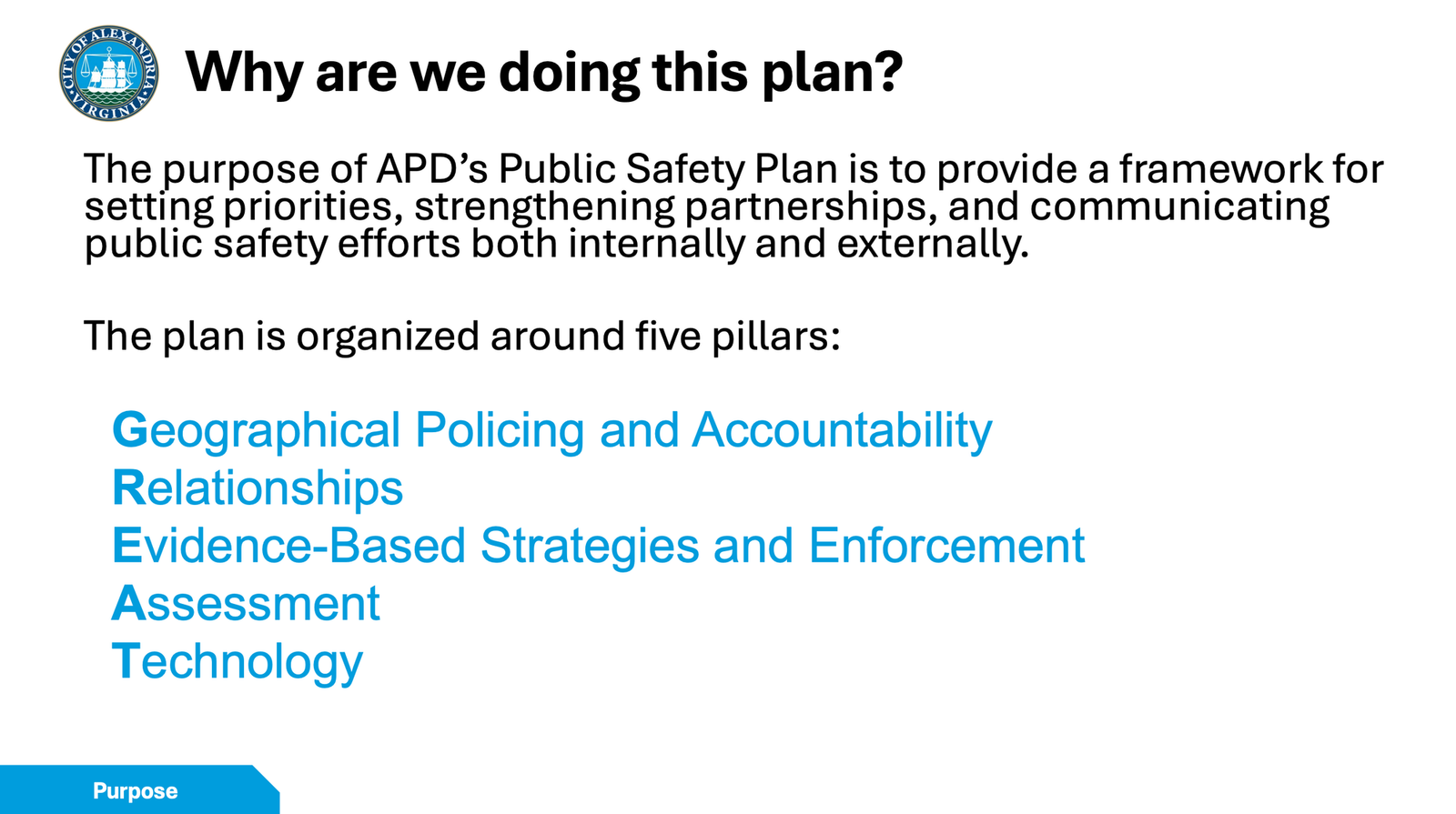
Earlier in the meeting, Police Chief Tarrick McGuire presented the department's new five-pillar Public Safety Plan — the "GREAT" framework (Geographical Policing and Accountability, Relationships, Evidence-Based Strategies and Enforcement, Assessment, and Technology) that the Brief detailed in its June 5 preview. As an advisory item, the news was in the council's response.
Bagley asked whether the data-driven beat realignment under the first pillar might be in place by National Night Out; McGuire was candid that it would not, putting the timeline "at least a year out." Dr. Engel, the department's research lead, told the council that analysis of school resource officer data is "not currently in our scope of work," though she said her team's role includes training department staff to do that deeper qualitative analysis in-house. And Gaskins pressed McGuire on metric alignment — asking how the department will ensure the council isn't evaluating APD against one set of numbers in the February budget process, a different set from the quarterly health-and-safety committee reports, and yet another from the new public dashboards. McGuire said APD is working with the city manager's office to align its data and will establish a publishing cadence tied to the plan.
On the action docket, the council approved consent items 12 through 26 in a single roll-call vote with nothing pulled for separate discussion. That block included first readings of the FY2027 appropriation ordinance, the general obligation bond ordinance, the 601 Wythe Street and 732 North Washington Street encroachments, the Blessed Sacrament/North Quaker polling-place move, and three boards-and-commissions code amendments — meaning all of them advance to Saturday's public hearing for second reading and final passage as written.
The council also seated its slate of board and commission appointments. Among the contested seats, two citizen members were appointed to the Traffic and Parking Board — incumbent Ashley Mihalik and Marcos Bernier — who were the majority vote-getters over Riley DePiano and Jacquelyn Kittredge. Council read in a Pride Month proclamation accepted by the Alexandria LGBTQ+ Task Force, which plugged Alexandria Pride on June 27 at John Carlyle Square Park.
What's on Saturday's docket
The June 13 public hearing, beginning at 9:30 a.m. at the Del Pepper Community Resource Center, is where Tuesday's previews become decisions. The PRGS items dominate: a resolution approving the term sheet and authorizing the city manager to negotiate and execute the project agreements (item 26-1009), and the full Phase I land-use package for Blocks B and C and the open spaces — a subdivision, amendments to the coordinated development district plan, and multiple development special use permits — which the Planning Commission recommended for approval 7-0 last week (item 26-1087).
Saturday also brings second reading and final passage of the ordinances introduced Tuesday: the FY2027 appropriation ordinance (item 26-1092), the general obligation bond ordinance (item 26-1091), the two encroachment ordinances, the polling-place move and rename (item 26-1093), and the three code amendments. Because none of those items were amended or pulled on first reading Tuesday, they reach Saturday's docket unchanged.
Beyond the recap items, the hearing carries business with no Tuesday counterpart: a master plan amendment creating the Housing 2040 Plan chapter (item 26-1088), authorization of the comprehensive agreement for the Waterfront Implementation Project (item 26-1089), three rezoning and special-use cases (1019 Cameron Street, 4154 Duke Street, and outdoor live entertainment at 699 Prince Street), and an amendment to the city code's sidewalk-encroachment provisions (item 26-0888).
In-person public comment will be received at Saturday's hearing. Written comments for the record can be emailed to the City Clerk at CouncilComment@alexandriava.gov, and the term sheet and project background are posted at alexandriava.gov/PRGS. The meeting is carried on government Channel 70, streamed on the city website, and accessible via Zoom.