A weekly look at Alexandria from the notebook of Ryan Belmore, founder and publisher of The Alexandria Brief — what I saw this week, what I'm watching, and what didn't fit into a story. Anything I couldn't confirm says so.
Here we go.
1. Flock. APD and ICE don't agree on how many Virginia agencies have 287(g) agreements. The department told council it restricted 24. ICE's own roster, updated Sept. 15, lists 22. Two numbers, one federal program, and the smaller one comes from the agency that runs it. It's also the fourth different count of who can reach Alexandria's camera data to surface in a month.
 Ryan Belmore
2. The motion that never appeared. The Commission on Information Technology voted unanimously in June to put a Flock cancellation motion on its next agenda. It never showed up. Three months later the commission is being asked to help write the rules for whatever replaces the system it wanted to vote on ending.
 Ryan Belmore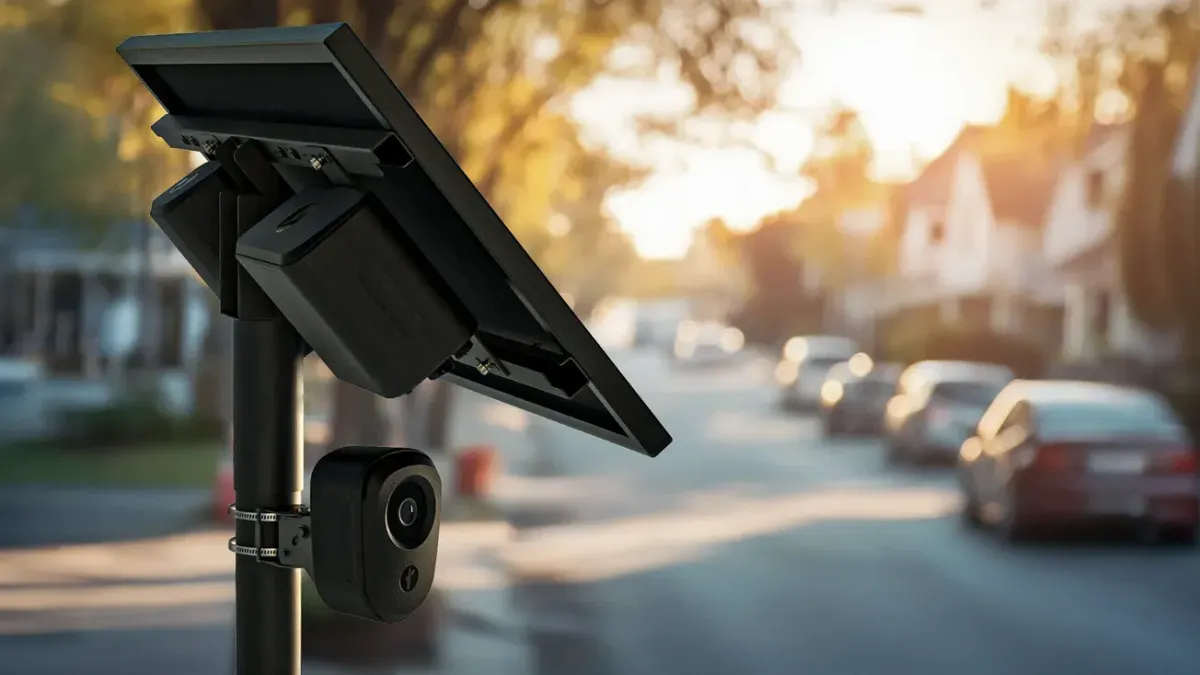
3. What the contract actually says. A commissioner put Flock's terms on screen Thursday. The city owns its data. The city also grants Flock an irrevocable, perpetual, worldwide license to use that data to improve the company's products. Those two provisions sit in the same agreement Alexandria has been operating under. "Working with Flock specifically comes at a significant cost to all of us," Ben McGinnis said.
 Ryan Belmore
4. The case for technology. Police Chief Tarrick McGuire told the commission Thursday that "if it were not for a nearby camera we would have not known anything happened" in this week's Mount Vernon Avenue stabbing, where the victim remains in critical condition, and that an arrest followed within 24 hours. He did not say which camera, and the remark came in a stretch about the department's use of technology generally. APD said the arrest followed multiple tips from the community after it released an image of the suspect captured by a security camera at a nearby business.
The other case he returns to is Timothy Valentin, the former MPD officer charged in Alexandria, Prince George's County and Takoma Park. After a grand jury indicted him in December, APD entered him into NCIC as a wanted felon and within hours a reader flagged his vehicle moving through the city. The stop led to the arrest, the arrest led to his phone, and the phone led to cases in two other jurisdictions.
I've spent three weeks on what this system can't account for, and Valentin is the case on the other side of the ledger. It's local detection, though — a hotlist alert on a plate already entered as wanted. It doesn't depend on the piece actually in dispute, which is which outside agencies can search Alexandria's archive and how long the data sits there.
Clarification: an earlier version of this item described the chief as crediting the license plate readers with the Mount Vernon Avenue arrest and characterized it as a same-city search. He said "a nearby camera," and APD has attributed the arrest to community tips following the release of a business security camera image.
 Ryan Belmore
5. The chief keeps showing up. McGuire mentioned Thursday that he'd been at an event with seniors earlier that day and they'd asked him about the readers. That's been the month: council, the IT commission, questions from residents who didn't come to a meeting to ask them. He told the commission he cut off the 287(g) agencies himself — "I made that executive decision" — asked members to send him five to 10 safeguards they want, and committed to come back before the department picks a vendor. He also said the program was in motion before he arrived, which is worth saying. He inherited it and he's the one answering for it.
Set beside that: the Alexandria Sheriff's Office runs its own license plate readers, doesn't appear on APD's outbound list, and publishes no transparency portal. Same city, same technology, two different postures toward explaining it.
 Ryan Belmore
6. DASH. The city and its own bus system disagree about whether there's another hole coming, and Wednesday is the first time both are in the room. The city says it doesn't anticipate an FY27 gap. DASH's own review says the FY27 budget rests on a false premise. Both statements were made within days of each other about the same fiscal year. The joint work session is Wednesday, 5:30 to 7:30 p.m., in the DASH board room at 3000 Business Center Drive. Mayor Alyia Gaskins turned down the board chair's request to postpone it.
 Ryan Belmore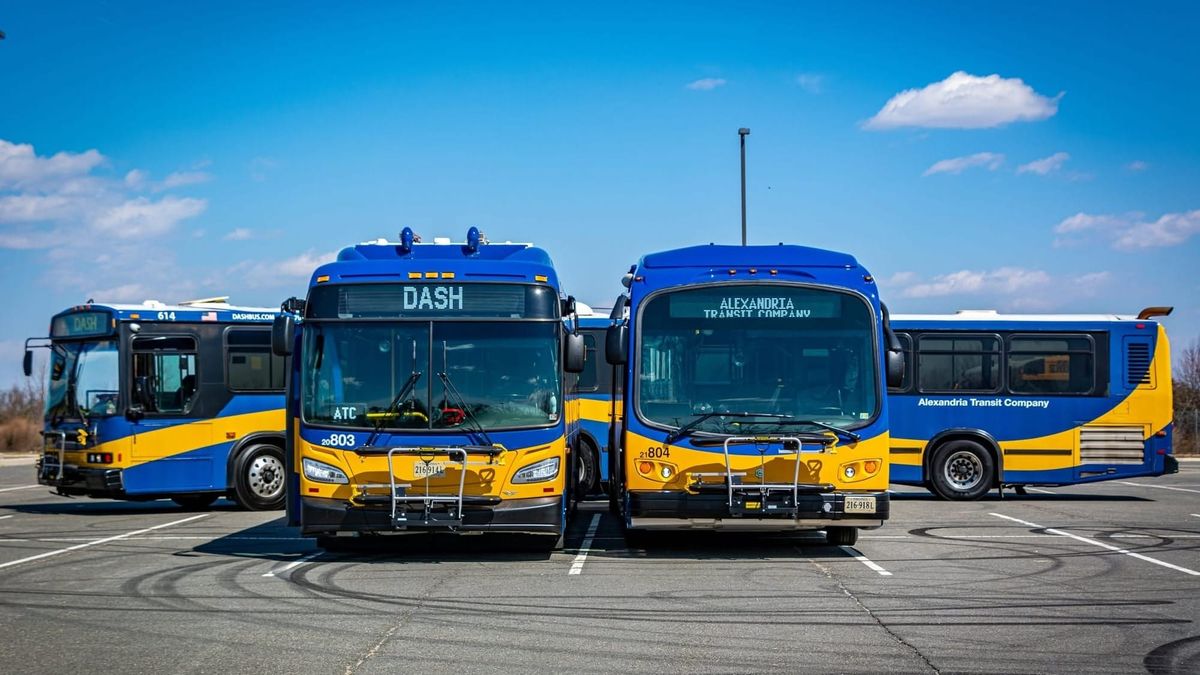
7. The School Board sets the next board's pay, and most of them could be on it. Virginia lets school boards adjust salaries only in the year before an election year, so whatever this board decides applies to the members elected in 2027. The window closes Dec. 31 and doesn't reopen until 2029. The rule is meant to keep a board from voting itself a raise. Alexandria has no term limits, no one has said they're leaving, and Abdulahi Abdalla has said he intends to run again.
There's a formula waiting. Regulation BHD-R, adopted March 6, 2025, says salaries get reviewed the year before each election and that the board will consider adjusting to 75% of a first-year ACPS teacher at bachelor's, step 1, 195 contract days. Against the FY27 scale, that teacher makes $57,924.75. Seventy-five percent is $43,443.56. The current salary is $15,000. This is the first cycle the formula has ever been applied.
A memo laying it out, dated Aug. 31 from Matt Smith through Operational Excellence Committee chair Donna Kenley, went to OEC on Aug. 31 and to Strategy and Accountability on Sept. 14 as an information item. It names no recommended figure. It states the threshold and lets the number sit there. School Board member Kelly Carmichael Booz told me a vote could come before Dec. 31 and that she doesn't know yet whether it will be the amount in the memo. The committee that ruled out 2027 for election changes has treated pay as outside its charge.
 Ryan Belmore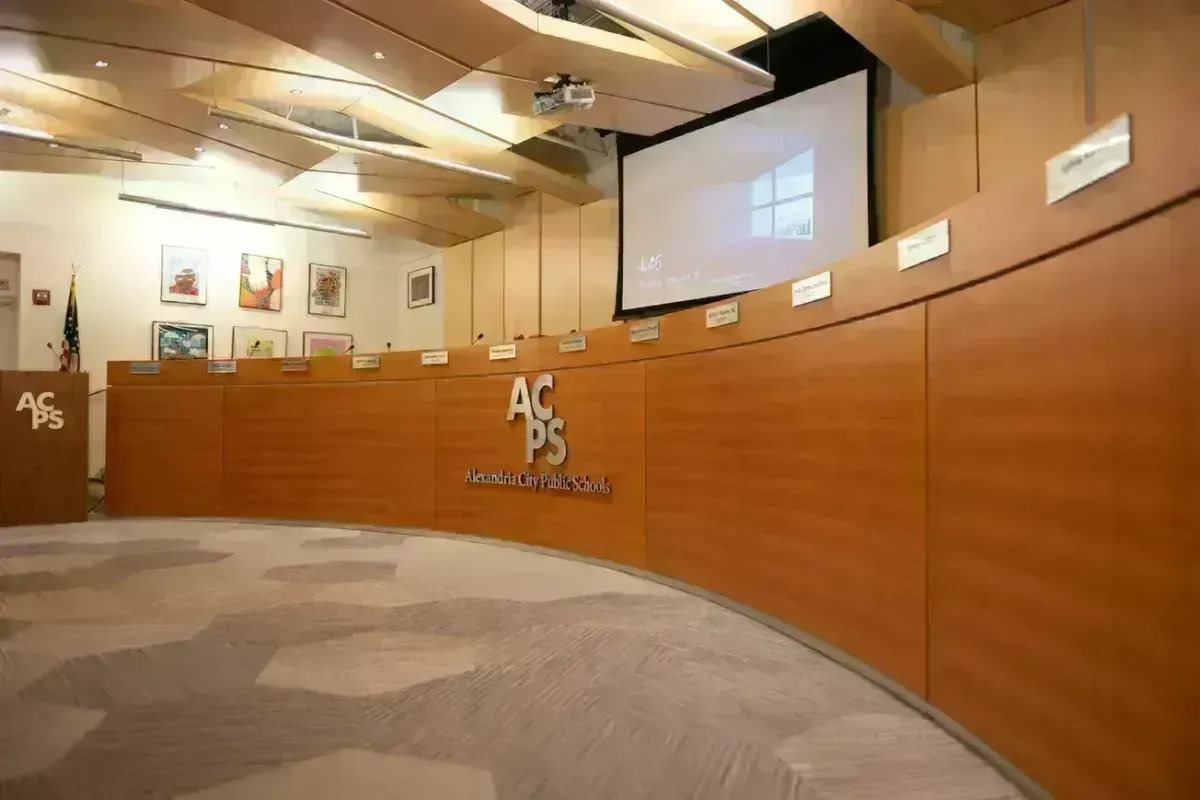
8. The rule that explains the disagreement. ACPS named four areas under review for walk zone appeals — Mount Vernon Avenue and Glebe Road for Mount Vernon Community School, Duke Street, Quaker Lane and Seminary Road for MacArthur, Alabama and Kentucky avenues for Charles Barrett, and Sanger Avenue and Beauregard Street for Ramsay. Decisions go out by Sept. 30.
Buried in the Q&A was the thing that accounts for most of the gap between families who believe a hazard qualifies them and staff who have said no. Hillary Orr, the city's deputy director of transportation planning and mobility, explained it: if a hazard exists within the mile but another path under a mile avoids it, the student is expected to walk the alternative. Gaskins asked whether that alternative path gets communicated to families. Chief Operating Officer Anthony Peña said not always. He described visiting a location listed as having no sidewalk and finding one across the street.
The rubric staff are using stays internal until the letters go out. "Currently, it's not public, to retain integrity of the process," Peña said. Gaskins, who gets the division's communications as a parent, said she wouldn't have known what "hazardous" meant without watching a School Board presentation. The division's Sept. 14 presentation is here.
One number is still missing after a month of this: ACPS has not said how many students lost bus eligibility when the new walk zones took effect.
 Ryan Belmore
9. The Tucker review. The board reviewing an in-custody death hasn't met since August, and the meeting that went away is the one where the reopened investigation was supposed to land. The city calendar lists the Independent Community Policing Review Board's Sept. 2 meeting as cancelled, no reason given. Next is Oct. 7. Independent Policing Auditor Ameratu Kamara told council July 29 she'd aim to return findings within 30 days and that Aug. 5 came too soon, which left Sept. 2. I've asked whether Tucker is on the Oct. 7 agenda and why September didn't happen.
 Ryan Belmore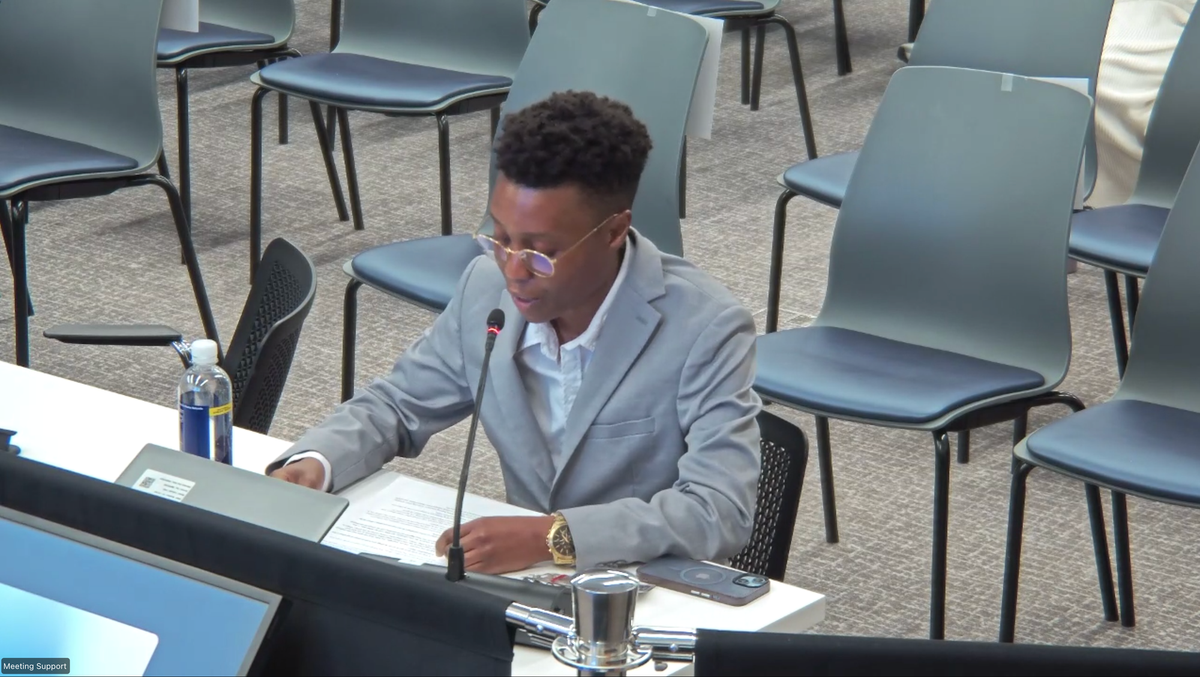
10. Seven times the threshold, and no vote anywhere. Gov. Abigail Spanberger's data center framework, announced Thursday, would end by-right approval for any data center drawing more than 25 megawatts. Dominion engineers told a Mason District committee in July that the substation for the Plaza 500 campus off Edsall Road is designed to supply 176. The campus is permitted under Fairfax County light industrial zoning, so it never went before a public body for a vote, and nothing in the framework would undo an approval already granted.
The one public hearing attached to the project is on Dominion's substation application, not the data center, and Dominion asked to move it from Sept. 24 to Dec. 2, saying it needed time to answer questions on noise, lighting and electromagnetic fields. The Save Bren Mar Coalition called that a stall tactic and says the substation would sit 67 feet from the nearest homes. Alexandria's council, Rep. Don Beyer, Mason District Supervisor Andres Jimenez and 33 civic and environmental groups have all asked the county to deny it. The city has no vote. As of Friday afternoon, neither the mayor's office nor Alexandria's Richmond delegation had said whether they'd push for the framework.
 Ryan Belmore
11. Duke Street. The Alexandria Chamber named Duke Street in its 2027 legislative agenda as the example of a corridor where the city ought to be seeking business input. The full draft comes out Sept. 29 at Patrick Henry Recreation Center, 7 p.m., with a 30-day comment period. There will be cake and barbecue.
 Ryan Belmore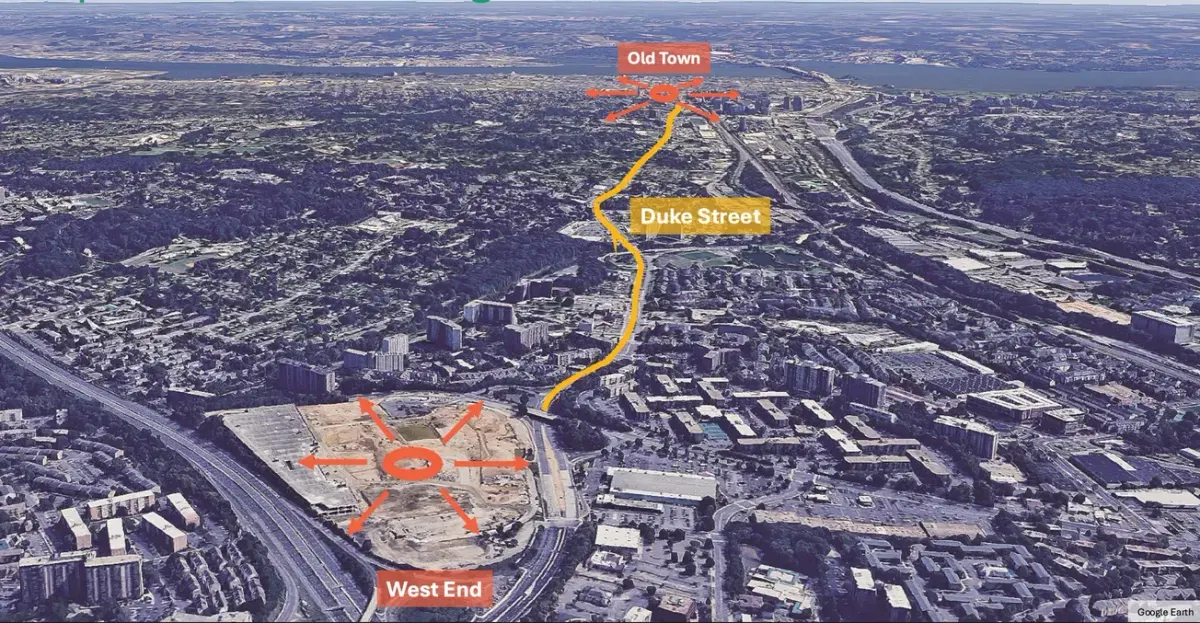
12. A tourist is anyone. Visit Alexandria marked 30 years this week with the tourism economy over $1 billion a second straight year and consumption tax revenue at a record $91 million. The part worth carrying around is what that means on your tax bill: $846 a household a year, by the organization's own math, in revenue the city doesn't collect from residents. And the definition is broader than most people picture. Someone driving in from Arlington for dinner on King Street counts the same as someone flying in from a thousand miles away. The money lands the same way.
 Ryan Belmore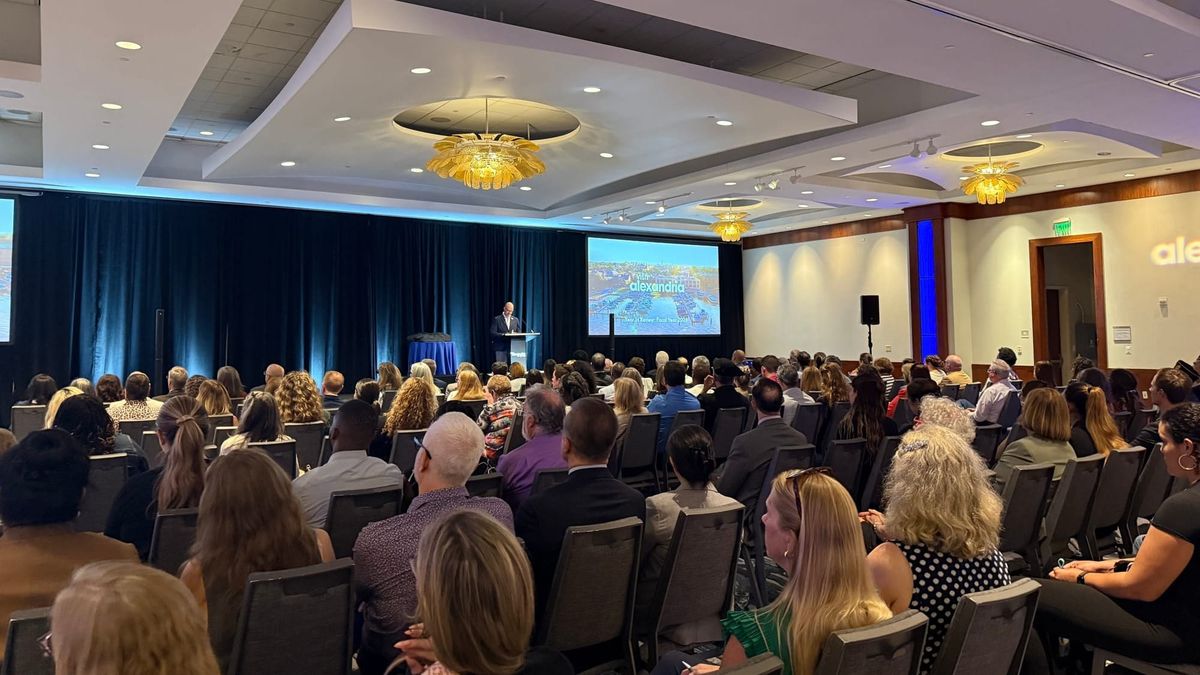
13. A handshake. Rep. Don Beyer and Sen. Mark Warner cast early ballots Friday morning in front of about 50 people on a 78-degree day. Beyer's Republican opponent was working the same line of voters. The two of them shook hands, talked a few minutes and laughed. I'll say plainly that I found it encouraging. I don't see much of it anymore.
 Ryan Belmore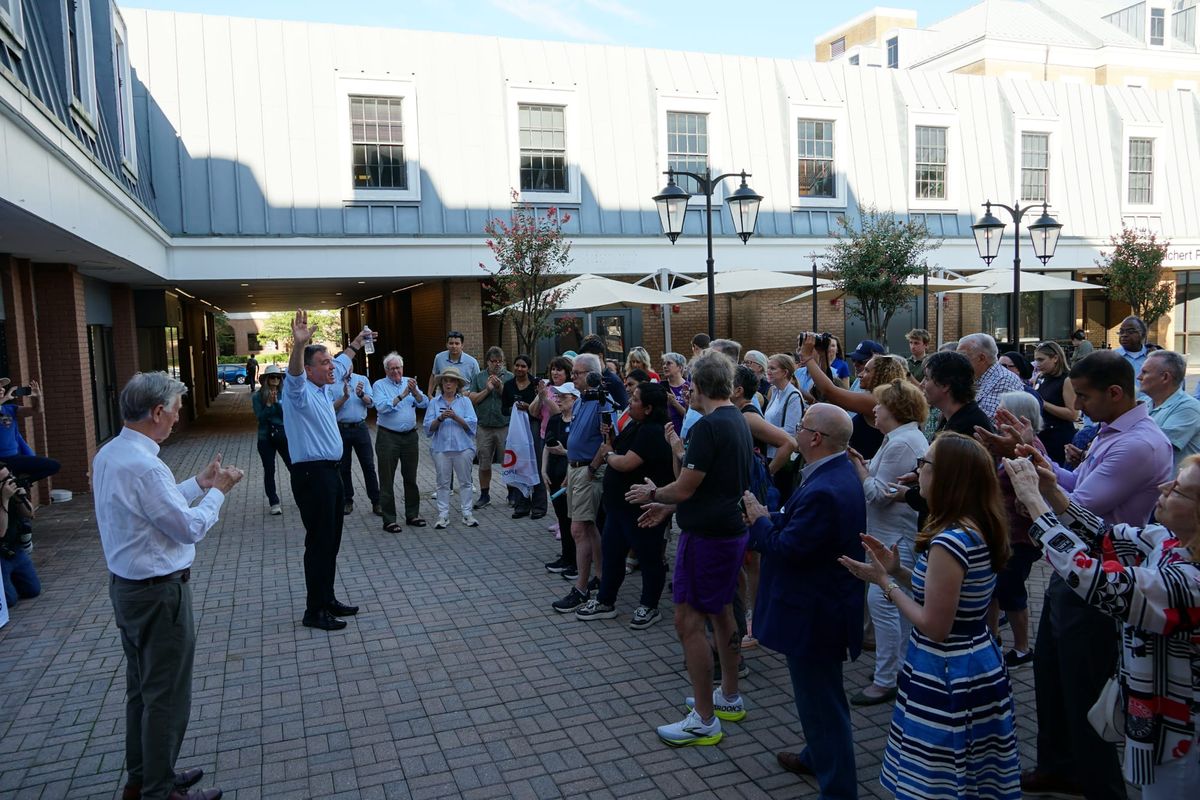
Quick hits
- Two fixes to Tuesday's story on the election committee. I wrote that Alexandria's $15,000 School Board salary is last among regional peers. It isn't — the board's own WABE source puts Falls Church at $3,600, Manassas Park at $3,000 and Manassas City at $12,000. Alexandria is fifth of eight, and last among divisions anywhere near its size; the three paying less enroll 2,700 to 7,600 students against ACPS's 16,395. I also had Prince William at $26,520. The memo and WABE both say $28,570.
- Student presence at Bradlee Shopping Center is now a standing item on the joint subcommittee's follow-up list, alongside crossing guards and CDL training, with staff meeting again ahead of the Sept. 25 homecoming game.
- Today: council hears the 3600½ Russell Road address appeal at the Del Pepper Center, the first appeal to reach council under an ordinance adopted in April after the trouble at that same address. Also final passage on the HB 915 ordinance, which would let the city push the Oct. 5 personal property deadline for furloughed federal employees. Bills went out Aug. 30.
- Children were present in half of 241 near-miss reports filed by Alexandria residents, and failure to yield was cited in three of four. We could all slow down.
- A house on W. Taylor Run Parkway sold this week for $1,650,000. It sold in February 2025 for $685,500. Nineteen months and a renovation later, that's $964,500 more.
- Big week for Cornerstone Craftsman: a share of $50,000 in workforce grants with the Scholarship Fund of Alexandria, and a visit from Gov. Spanberger.
- The Brief is one of 36 Best in Business finalists named by the chamber. Disclosure, since I'm reporting on an award I'm up for: the Brief is a chamber member, and Jen Walker is Business Leader of the Year at the Oct. 28 event.
- Plenty on the calendar this weekend. Wunderfest is at Port City today, free, no tickets. Enjoy it.
The stories I'm most proud of this week — the DASH overrun, the Flock camera restrictions, the school board coverage, the data center framework at Alexandria's edge — are all linked above and all free to read. None of them appeared anywhere else.
Last thing. I hit publish 58 times this week, 36 of them mine, with reporting from The Associated Press and the Virginia Mercury filling in around the edges. The Brief goes to 6,459 subscribers, 315 of whom pay for it, and 50,598 unique visitors came to the site this week. Eighteen of you started paying in the last seven days, which is the most in any week since I started. No ads, no sponsors, no paywall — those 315 are the reason the rest of it is free.
The most-read thing I published this week was not the $3.7 million DASH overrun. It was a Wizards guard hosting a party at a wine bar on the waterfront, by about 120 readers. I've stopped being surprised by this.
One open question from Visit Alexandria's meeting: its speakers walked up to 1996 songs, and I've asked for the playlist so we can all judge. What would yours be?
The Alexandria Brief runs solely on reader support — no ads, no corporate owner. If this story was worth reading, consider becoming a monthly or annual supporter.
Become a supporter · One-time contribution · Gift a membership
Ryan Belmore is an Alexandria journalist, neighbor, and the founder and publisher of The Alexandria Brief. Send tips and feedback to ryan@alexandriabrief.com.
© 2026 Alexandria News, LLC. All rights reserved. This material may not be published, broadcast, rewritten, or redistributed without permission.